Type 6
Enneagram Type 6: The Steadfast
Type 6, the Steadfast, looks for security, trust and solid ground. Learn the core fear and desire, wings, stress and growth lines, and how Sixes grow.
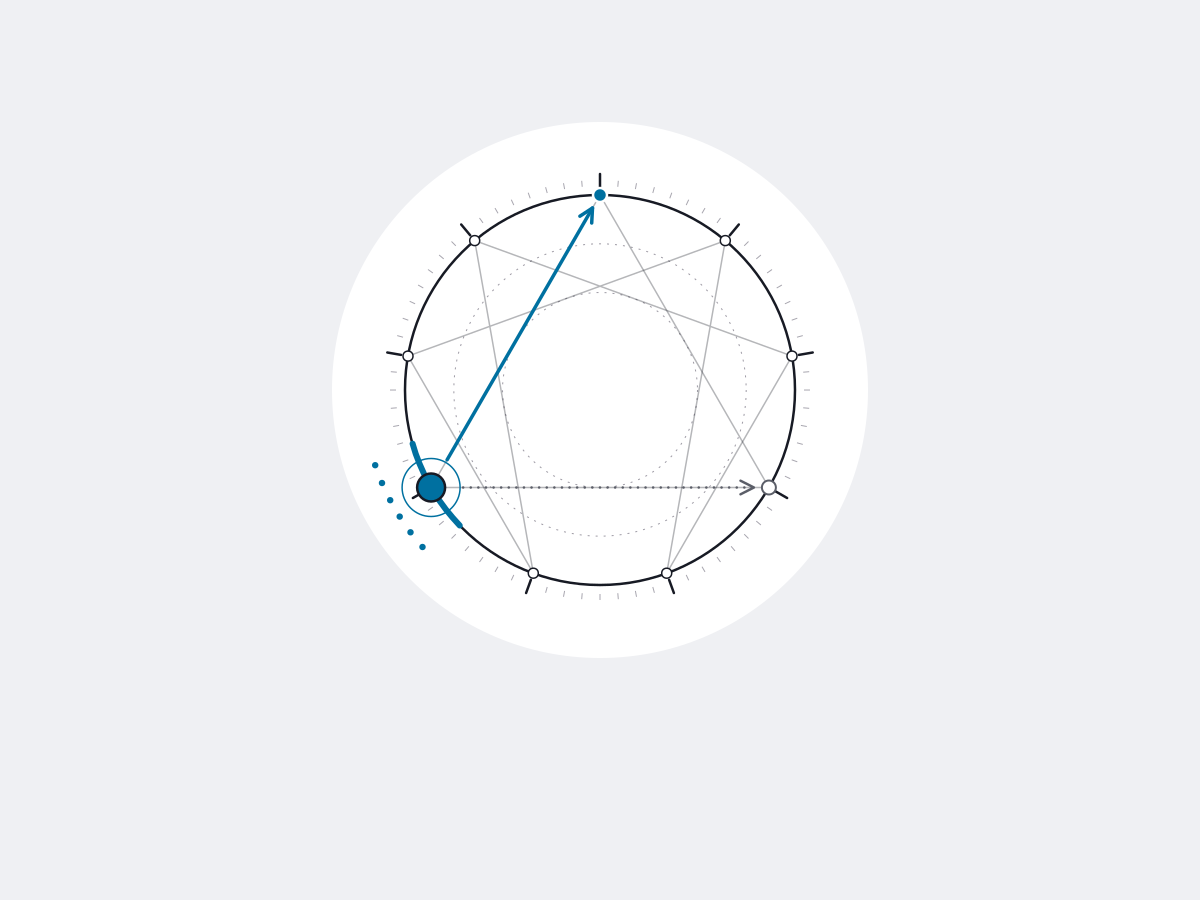
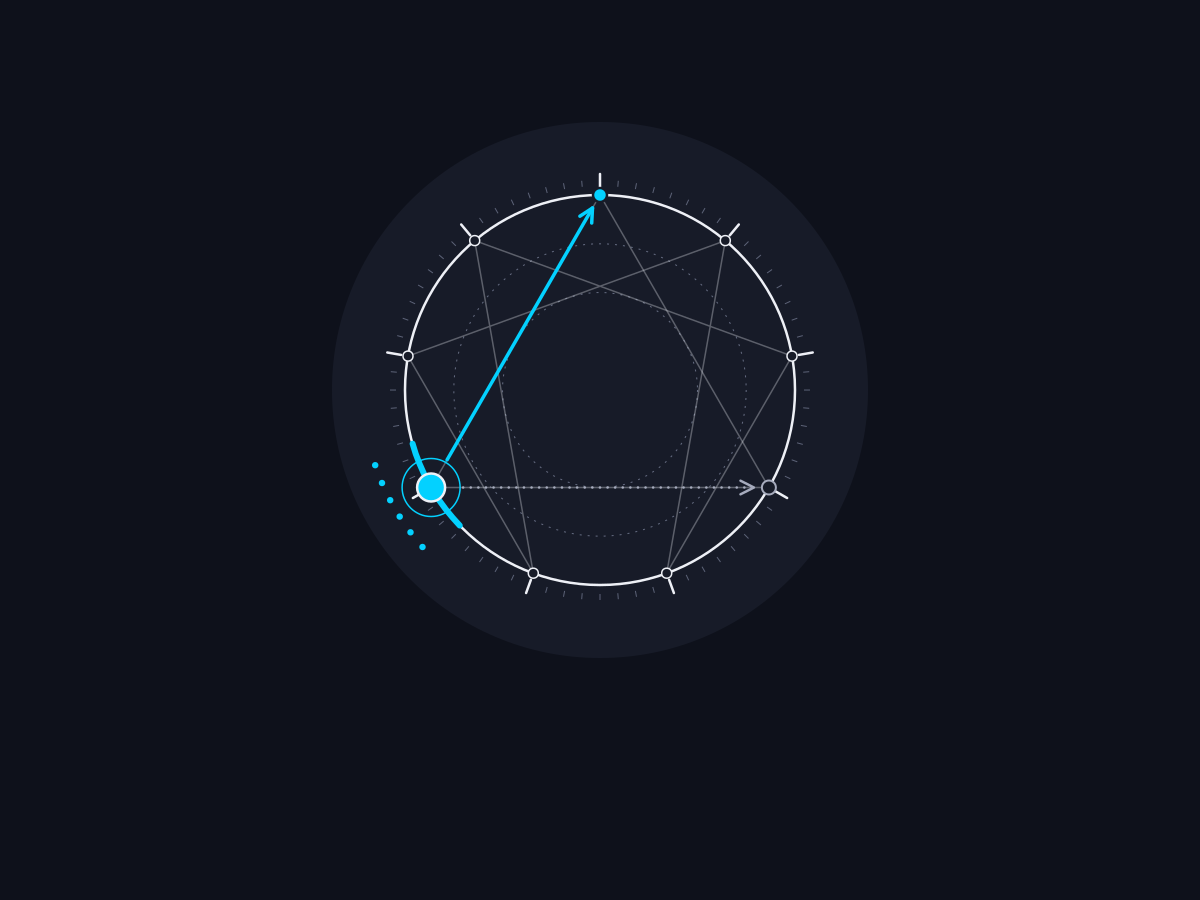
Enneagram Type 6, the Steadfast, is a head-center type driven by the wish to feel secure, supported and sure of where they stand. Sixes tend to spot risks early, stay loyal to the people and groups they trust, and prepare for what could go wrong.
What is a Type 6?
A Type 6 is a person whose attention goes to safety and trust. Many Sixes ask "What could go wrong?" and "Who can I count on?" They tend to be loyal, responsible and alert to risk, and they often question authority until it earns their trust. Real Sixes vary. Treat this as a common thread, not a fixed profile.
Picture the friend who checks the weather before a hike and packs extra water for everyone. Or the coworker who asks, "What is our backup if the vendor is late?" Or the neighbor who knows who has a spare key and who needs a ride on Tuesdays. Those are everyday glimpses of the Six pattern.
Sixes live in the head center, alongside Type 5 and Type 7. All three head types respond to uncertainty with the mind. Fives pull back and study. Sevens look for options and fun. Sixes look outward for support and inward for certainty, and often swing between trusting and doubting both.
Think this might be you? Take the test and see how your results compare with this page.
Type 6 at a glance
| Trait | Type 6 |
|---|---|
| Center | Head (thinking) |
| Core fear | Being left with no support or safe ground |
| Core desire | To feel secure, supported and sure of where they stand |
| Vice | Fear (or anxiety) |
| Virtue | Courage |
| Wings | 6w5, 6w7 |
| Stress line | Toward Type 3, The Driver |
| Growth line | Toward Type 9, The Harmonizer |
| Key strength | Loyalty, foresight and steady follow-through |
| Growth edge | Worry, second-guessing and testing trust |
What drives a Type 6?
Sixes are driven by a fear of being left with no support or safe ground and a desire to feel secure and sure of where they stand. Their core motivation is to prepare for problems and build trust they can count on. The vice is fear, and the virtue is courage.
Each type has a core fear and a core desire. For Sixes, both turn on safety and trust.
Core fear: no safe ground
Many Sixes carry a sense that the ground could shift at any moment. A plan could fall through. A friend could change. A leader could let them down. The fear is of being caught alone when that happens, with no one to lean on and no plan to fall back on.
That fear is not always loud. It can be a low hum in the background. A Six might reread an email four times before sending it, or ask a partner, "Are we okay?" after a small disagreement.
Core desire: security and support
What Sixes want most is to feel secure. That can mean a steady job, a trusted group of friends, a clear set of beliefs or a well-tested plan. When a Six has that, they can relax and become one of the warmest and funniest people around.
Core motivation: preparing and building trust
Sixes tend to prepare for what could go wrong and test what they can count on. They ask questions. They run through "what if" scenarios. They watch whether people keep their word. This can look like doubt from the outside, but it is often a search for something solid enough to trust fully.
Vice and virtue: fear and courage
The traditional vice linked with Type 6 is fear, sometimes called anxiety. It is the habit of living a few steps ahead, scanning for danger, even when things are fine.
The virtue is courage. For a Six, courage does not mean having no fear. It means feeling the fear and acting anyway, and trusting their own inner guidance instead of waiting for certainty that never comes.
What are the strengths of a Type 6?
Common Type 6 strengths are loyalty, preparation, responsibility, a talent for spotting problems early, protectiveness and warm, self-aware humor. Many Sixes are the glue in families and teams. They follow through, look after others and stand up for people who are left out.
Sixes hold groups, families and teams together. Many Sixes are:
- Loyal. Once they trust you, they tend to stick around through hard times.
- Prepared. They think ahead, which often saves the day.
- Responsible. They follow through and take their commitments seriously.
- Good at spotting problems. They see flaws in a plan before anyone else does.
- Protective. They stand up for the underdog and for the people they care about.
- Funny. Many Sixes have a warm, self-aware humor that helps everyone relax.
What are the growth edges of a Type 6?
Typical Type 6 growth edges are worst-case thinking, second-guessing choices, testing people who have already earned trust, swinging between leaning on authority and rejecting it, and assuming others feel what they fear. These show where useful caution has tipped into worry.
The same alertness that keeps a Six ready can wear them out. Watch for:
- Worst-case thinking. Imagining every way things could go wrong.
- Second-guessing. Making a choice, then doubting it, then asking five people.
- Testing people. Watching for signs of betrayal, even with people who have proven themselves.
- Swinging on authority. Leaning hard on a leader, then pushing back hard when trust breaks.
- Projecting. Assuming others feel or plan what the Six fears they might.
None of this means a Six is weak. These are the places where useful caution tips into worry.
What are phobic and counterphobic Sixes?
Sixes handle fear in two broad ways. A phobic response moves away from threat through reassurance, rules and caution. A counterphobic response moves toward threat by challenging authority or taking bold risks. Most Sixes use both, and counterphobic Sixes can look a lot like Type 8.
Many teachers note that Sixes handle fear in two broad ways. Most Sixes use both, at different times.
- Phobic responses move away from the threat. The Six may seek reassurance, follow the rules closely and avoid risk.
- Counterphobic responses move toward the threat. The Six may challenge authority, take on scary tasks or act tough to prove that fear has no hold on them.
A counterphobic Six can look a lot like Type 8. The key difference is the source. An Eight acts from a sense of strength. A counterphobic Six acts boldly because, deep down, they are trying to beat the fear.
How do the wings change a Type 6?
A Six's wings are Type 5 and Type 7. A 6w5 tends to be more serious, analytical and independent, trusting data and expertise. A 6w7 tends to be warmer, more social and playful, finding security through friends. Most Sixes lean toward one wing more than the other.
Sixes sit between Type 5 and Type 7 on the Enneagram circle. Most lean a bit more toward one wing.
Move the slider to see which wing shapes the type more.
Balanced between 6w5 and 6w7
6w5
A 6w5 is a Type 6 who leans toward Type 5. Many are serious, analytical and fiercely loyal to the people and causes they trust. They prepare carefully and question authority until it earns their confidence. They grow by trusting their own judgment and by letting calm, not fear, guide their choices.
Read more about 6w56w7
A 6w7 is a Type 6 who leans toward Type 7. Many are friendly, funny and loyal, and they build strong networks of people they can count on. Humor and activity help them handle worry. They grow by facing fears directly, trusting their own decisions and slowing down instead of staying busy.
Read more about 6w76w5: the guarded Six
A 6w5 adds some of Type 5's love of knowledge and privacy. These Sixes tend to be more serious, analytical and independent. They often trust systems, data and expertise. Many are drawn to fields where careful thought and loyalty to a cause go hand in hand.
A 6w5 may be harder to get to know and slower to warm up. They can be fiercely protective of their group. Their growth often involves trusting their own conclusions without needing more and more proof.
6w7: the friendly Six
A 6w7 adds some of Type 7's playfulness and social energy. These Sixes tend to be warmer, more talkative and more fun-loving. They often seek security through friends and community, and they may use humor to ease tension.
A 6w7 may seem more upbeat on the surface while worry runs underneath. They can take on a lot to avoid letting people down. Their growth often lies in saying no, and in facing worries directly instead of talking around them.
What happens to a Type 6 under stress?
Under stress, Sixes move along the stress line toward Type 3. They may stay busy to quiet worry, focus on looking competent and push hard to prove themselves. The fear stays underneath the activity. Slowing down and naming the fear to someone trusted often helps.
The stress line for Sixes points to Type 3, The Driver. When a Six feels overwhelmed, they may take on traits of a Three on a hard day.
That can look like:
- staying busy to drown out worry
- focusing on looking competent and in control
- pushing hard to prove themselves or win approval
- cutting corners or losing touch with their feelings to get things done
Here is a picture of it. A Six worried about losing their job starts taking on every task, staying late and polishing how they come across in meetings. They feel productive, but under the activity the fear is still there, unspoken.
When you notice this, it can be a cue. Slow down, name the fear out loud to someone you trust and ask what you actually need.
The stress point can hold a gift too. The Three's energy for action can help a Six move past endless planning and get moving, as long as they stay honest with themselves.
What does growth look like for a Type 6?
In growth, Sixes move along the growth line toward Type 9. They settle in the body, trust the present moment, let go of some backup plans and accept people without constant proof. They keep their loyalty and foresight and carry them with less strain.
The growth line for Sixes points to Type 9, The Harmonizer. When a Six feels safe enough, they often pick up some of the Nine's calm and trust.
Growth for a Six can look like:
- Settling in the body. Noticing tense shoulders or a racing heart and letting them ease.
- Trusting the moment. Seeing that, right now, things are mostly okay.
- Letting go of some plans. Accepting that not every problem needs a backup plan.
- Accepting other people. Giving trust without needing constant proof.
A Six on this path keeps their loyalty and foresight. They simply carry them with less strain, and they find that much of the security they wanted was inside them all along.
What are the health states of a Type 6?
We describe three health states. A thriving Six is brave, warm and able to act without full certainty. An everyday Six is loyal, responsible and a bit watchful. A stressed Six may become anxious, suspicious and reactive. Anyone can move between these states, often in one week.
We describe three health states: thriving, everyday and stressed. They are not a ladder. Anyone can shift between them, often in the same week.
| State | What it can look like in a Six |
|---|---|
| Thriving | Brave, warm, trusting, steady and able to act without full certainty |
| Everyday | Responsible, loyal, a bit watchful, likes plans and clear expectations |
| Stressed | Anxious, suspicious, reactive, stuck in doubt or lashing out at "the enemy" |
Thriving
A thriving Six is a rock for others. They trust themselves. They can face hard things with calm courage. They are loyal without being blind, and they bring warmth and humor to every group they join.
Everyday
Most days, a Six lives in the middle. They plan ahead, check in with the people they trust and keep an eye on what could go wrong. They may feel a flicker of worry before a trip and then enjoy it once they are on the road.
Stressed
Under heavy stress, a Six may feel that the world is unsafe and people cannot be trusted. They may spiral through worst cases, lose sleep or turn sharply against someone they see as a threat. If this lasts, reaching out to a trusted person or a licensed professional can help a great deal. The Enneagram can support reflection, but it does not take the place of real help.
How do the instincts shape a Type 6?
The three instincts color how a Six shows up. A Self-Preservation Six seeks safety through warmth, a safe home and a small trusted circle. A Social Six looks for security in rules, roles and shared beliefs. A One-to-One Six often shows bold, counterphobic strength and fierce loyalty.
Many teachers describe three instincts that shape each type. The idea of instinctual subtypes is often linked to Claudio Naranjo. Here is our own summary for Sixes.
Self-Preservation Six
A Self-Preservation Six often seeks safety through warmth and close bonds. They may be the most openly worried of the Sixes, and the most likely to build a safe home and a small, trusted circle. Many are friendly and kind as a way of creating allies.
Social Six
A Social Six tends to look for security in rules, roles and shared beliefs. They may be dutiful and well informed about how things should be done. They often feel safest when they know the guidelines and their place in the group.
One-to-One Six
A One-to-One Six (sometimes called sexual) often shows the most counterphobic energy. They may seem strong, bold or intimidating as a way of facing fear. They can also be intensely loyal and protective in close relationships.
What are Type 6s like in relationships?
In relationships, Sixes tend to be loyal, caring and dependable. They show love by keeping promises and looking out for you. They may seek reassurance, test trust and doubt good things at first. Consistency, honest answers and patient reassurance help a Six relax and commit.
In love and friendship, Sixes can be deeply loyal, caring and dependable. They often show love by showing up, keeping promises and looking out for you.
Common patterns:
- Seeking reassurance. A Six may ask "Are we okay?" more often than a partner expects.
- Testing trust. They may watch closely to see if your words and actions match.
- Doubting good things. When a relationship is going well, a Six may wait for the catch.
- Fierce loyalty. Once a Six commits, they are often in it for the long run.
What helps a Six in a relationship:
- be consistent; do what you say you will do
- answer questions honestly instead of brushing them off
- reassure without mocking the worry
- include them in plans so they are not left guessing
What a Six can practice:
- notice when you are reading a threat into a neutral moment
- share the worry instead of acting on it in secret
- let a good moment be good, without looking for what might spoil it
See how Sixes pair with other types: Type 6 and Type 8, Type 6 and Type 9 or Type 3 and Type 6.
What are Type 6s like at work?
At work, Sixes often keep projects on track and teams honest. They shine at spotting risks, following through on details and looking after colleagues. Unclear roles, shifting goals and leaders who break their word wear them down. Clear goals and kept promises bring out their best.
Sixes are often the people who keep projects on track and teams honest. They do their best when expectations are clear, leaders are fair and they can trust the people around them.
Sixes often shine at:
- spotting risks and gaps in a plan before launch
- following through on details
- building team loyalty and looking after colleagues
- asking the hard questions that protect everyone
They may struggle with:
- unclear roles or shifting goals
- leaders who say one thing and do another
- making big decisions alone with little information
- workplaces where trust feels thin
Colleagues can help by being clear about goals, explaining the reasons behind decisions and keeping their word. Types describe tendencies, so they work best as a way to talk about communication. Never use them to decide who gets a role or a raise. For more ideas, see careers for Type 6.
How can a Type 6 grow?
A Six can grow by naming fears in one line, rating how likely a worst case really is, waiting a day before polling others, breathing out slowly, listing evidence of trust, taking small brave steps and limiting news and scrolling. Growth means trusting yourself more and fear less.
Growth for a Six is not about becoming fearless. It is about trusting yourself more and fear less. Choose one practice to try this week:
- Name the fear in one line. Write "I'm afraid that..." and finish the sentence. Seeing it on paper often shrinks it.
- Ask "How likely is this?" When a worst case pops up, rate how likely it is from 1 to 10. Then ask what you would do if it happened.
- Make a decision and wait a day. Give yourself 24 hours before asking anyone else for their view. Notice what your own gut says.
- Breathe out longer than you breathe in. A slow exhale can calm the body when the mind is racing.
- List your evidence of trust. Write down times you handled hard things, and people who came through for you.
- Take one small brave step. Pick something mildly scary, like speaking first in a meeting, and do it.
- Limit the news and the scroll. Constant updates can feed worry. Set a time window and stick to it.
What does a Type 6 look like day to day?
Day to day, many Sixes run a quiet layer of checking: locks, messages, plans and possible problems. They also offer a lot of practical care, like reminders, check-ins and backup supplies. When settled, their humor comes forward. When unsure, the checking grows louder.
A Six's ordinary day often has a quiet layer of checking. Did I lock the door? Did my boss sound annoyed in that message? Is the car making a new noise? Most of this happens fast and in the background. Other people may never see it.
There is also a lot of care in that day. A Six may text a friend who had a doctor's visit, bring snacks for the long meeting and remind the team of a deadline no one else wrote down. Much of what keeps a home or office running smoothly comes from this kind of quiet attention.
When a Six feels settled, the checking fades and their humor comes forward. They can be playful, a little goofy and very good company. When they feel unsure, the checking gets louder, and they may seek more input from friends, reviews or experts before acting.
How can you support a Type 6?
You can support a Six by being steady and keeping small promises, explaining changes early, taking their what-if questions seriously, pointing out times their judgment was right and staying calm and honest when they test you. That is often how lasting trust gets built.
If someone you care about is a Six, try these:
- Be steady. Small, kept promises build more trust than big gestures.
- Explain changes early. Surprises, even good ones, can set off worry. A heads-up helps.
- Take the question seriously. If a Six asks "What if this goes wrong?" talk it through instead of saying "Don't worry."
- Point out their strengths. Sixes often doubt their own judgment. Remind them of times they got it right.
- Stay through the test. If a Six pushes back or doubts you, stay calm and honest. That is often how trust gets built.
Who is commonly typed as a Type 6?
Figures commonly typed as Sixes include J.R.R. Tolkien, Tom Hanks and fictional characters such as Samwise Gamgee and George Costanza. These are outside guesses, not facts, and none of these people took our test. Use them as a loose sketch, never as proof of what a Six is.
People often type famous public figures as Sixes, but these are guesses. No one can know another person's type from the outside, and none of these people took our test.
People commonly typed as Sixes include:
- J.R.R. Tolkien, the author, because of his focus on loyalty, duty and fellowship
- Tom Hanks, the actor, often typed this way for his warm, everyman public persona
- George Costanza, the fictional sitcom character, for his comic, nonstop worry
- Samwise Gamgee, the fictional hobbit, as a picture of steady loyalty
Others may type these figures quite differently. Use this list as a loose sketch, never as proof of what a Six has to be.
What are common myths about Type 6?
Common myths say Sixes fear everything, always follow rules, are negative or cannot decide. In practice, many Sixes are very brave, some question every rule, most are hopeful people who like to be ready, and they decide well once they have checked enough angles.
Myth: Sixes are scared of everything. Many Sixes are brave, and some are bolder than any other type. Fear is their starting point, but courage is often the result.
Myth: Sixes always follow the rules. Some do. Others question every rule they meet. Both responses come from the same wish to know what can be trusted.
Myth: Sixes are negative. Sixes tend to see problems early. That is not the same as being negative. Many are hopeful people who simply like to be ready.
Myth: Sixes can't make decisions. Sixes can decide very well. They may just take longer, check more angles or ask for input first, especially when the stakes feel high.
Could you be a different type?
Sixes are often confused with Type 1, Type 8, Type 9 and Type 5. The key is motive. Sixes seek security and trust. Ones follow an inner sense of right, Eights push from strength, Nines avoid conflict for peace and Fives research to feel capable alone.
Sixes are one of the most commonly mistyped types. Their patterns can look like many others. Look at motive, not just behavior.
| If you relate to... | Ask yourself... |
|---|---|
| Type 1, The Principled, the Principled | Do I follow the rules because they are right, or because they feel safe? |
| Type 8, The Powerhouse, the Powerhouse | Do I push back from strength, or to face down fear? |
| Type 9, The Harmonizer, the Harmonizer | Do I avoid conflict to keep peace, or because it feels risky? |
| Type 5, The Scholar, the Scholar | Do I research to feel capable alone, or to know who I can trust? |
A One holds to an inner sense of right and wrong. A Six looks for security, and that can come from rules, people or plans. If two types still seem to fit, our Type Check can help you weigh them after the test.
How accurate is the Enneagram for Type 6?
The Enneagram is a helpful lens for reflection, but research support is mixed. A 2021 systematic review found some useful results, plenty of gaps and a need for stronger studies. Treat this page as a starting point for your own questions, not as a final answer.
Sixes like to check sources, so here is ours. The Enneagram is a helpful lens for reflection, but research support for it is mixed. A 2021 systematic review by Hook and colleagues found some useful findings, plenty of gaps and a need for stronger studies. The Enneagram of Personality overview gives more history.
Treat this page as a starting point for your own questions, not a final answer. Our test is built with standard psychometric methods, and we publish reliability on our methodology page.
Frequently asked questions
What is Enneagram Type 6?
Type 6, the Steadfast, is one of the three head-center types. Sixes focus on security, trust and preparing for problems. Many are loyal, responsible and quick to notice risks.
What is the core fear of a Type 6?
Many Sixes fear being left without support or solid ground when something goes wrong. That fear can make them careful planners and also lead to doubt and worry.
What are the two Type 6 wings?
A Six can lean toward Type 5 (6w5) or Type 7 (6w7). 6w5 tends to be more reserved, analytical and independent. 6w7 tends to be more social, playful and outgoing.
What happens to a Type 6 under stress?
On the stress line, many Sixes take on traits of Type 3. They may get busy to quiet their worry, focus on image, or push hard to prove themselves.
How does a Type 6 grow?
On the growth line, Sixes move toward Type 9. That often looks like a calmer body, more trust in the moment and less need to plan for every possible problem.
What is a counterphobic Six?
Some Sixes meet fear by running toward it. They may seem bold, contrary or even reckless. They are still driven by fear, but they respond by facing it head-on.
Which types are often confused with Type 6?
Sixes are often confused with Type 1, Type 8, Type 9 and Type 5. Look at the motive: Sixes are driven by a need for security and trust.