Type 3
Enneagram Type 3: The Driver
Type 3, the Driver, wants to feel valuable through what they achieve. Learn the core fear, wings, stress and growth lines, and how Threes grow.
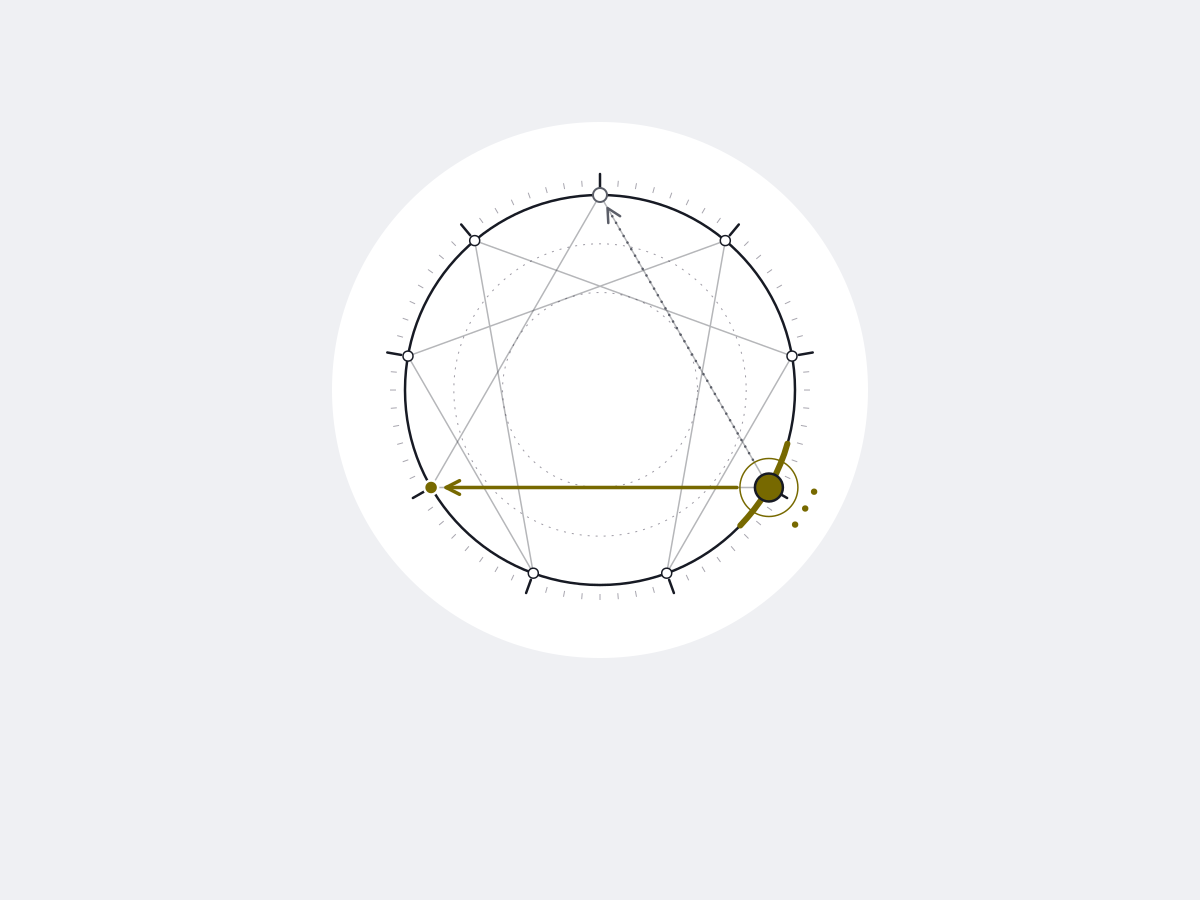
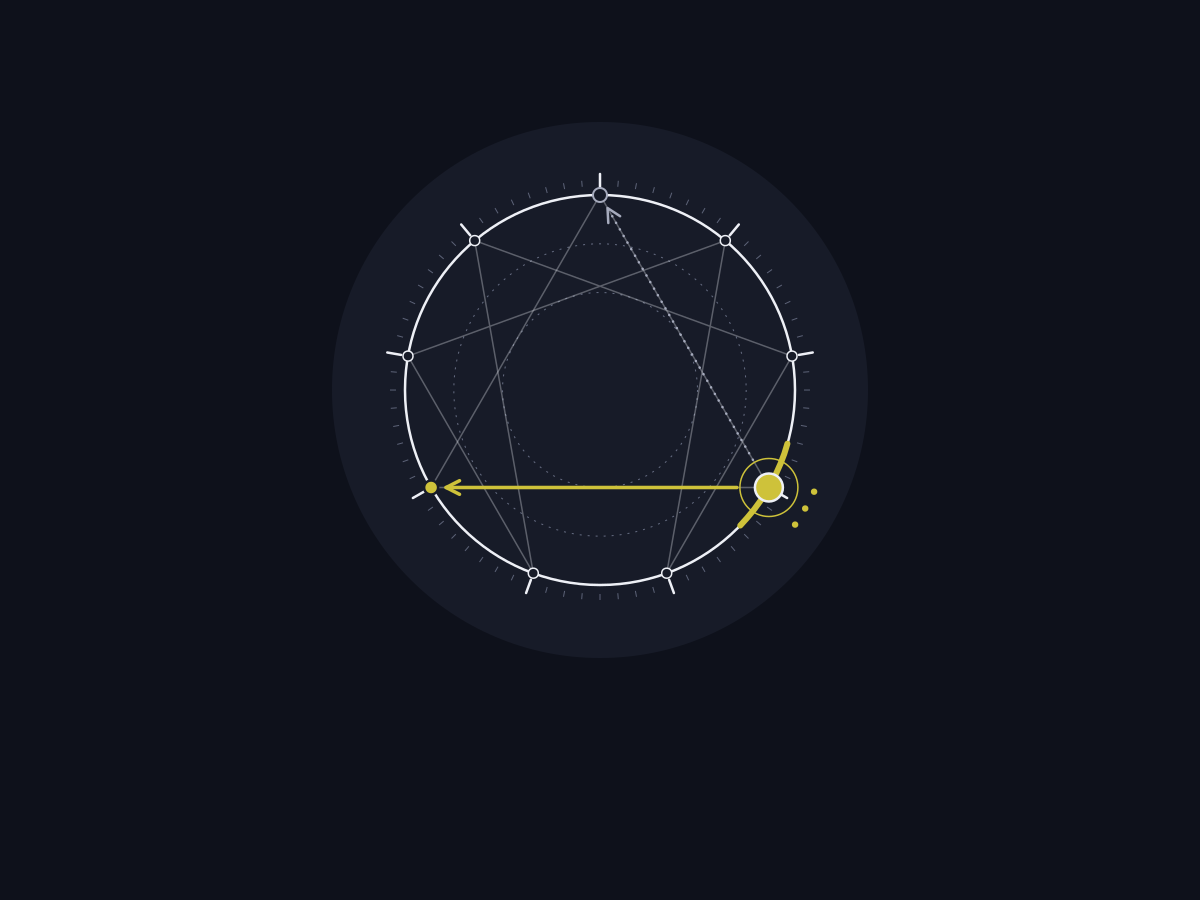
Enneagram Type 3, the Driver, is one of the nine Enneagram types. Threes tend to focus on goals, progress and how they come across. They are often energetic and adaptable, and they feel most at ease when they are moving forward and doing well.
What is a Type 3?
A Type 3 is someone whose attention goes to goals and to what success looks like in each setting. Many Threes are efficient, upbeat and skilled at reading a room. Their challenge is that they can become so focused on results and image that they lose touch with their own feelings.
Picture someone who walks into a new job and, within a week, knows what the boss values most. They adjust their style, set a few clear targets and start hitting them. People admire how quickly they find their feet. Privately, they may wonder whether anyone would like them as much if they stopped performing so well.
Threes sit in the heart center with Types 2 and 4. Heart types are tuned to image and how they are received. For Threes, the inner question is often "Am I worth something? Do people respect me?" Success becomes a way to answer yes.
Many Threes have a talent for becoming whatever a situation calls for. In a pitch meeting they are sharp and polished. At a kids' party they are fun and easy. This flexibility is a real skill. It can also leave a Three unsure which version is the real one.
Being a Three is not about being shallow. Many Threes are kind, generous and deeply loyal. Their drive often comes from wanting to provide, to inspire or to prove that hard work pays off. Growth asks them to add one more goal to the list: being honest about who they are, even when it does not impress anyone.
Type 3 at a glance
| Trait | Type 3 |
|---|---|
| Center | Heart |
| Core focus | Goals, success and being valued |
| Core fear | Being worthless without achievements |
| Core desire | To feel valuable and respected |
| Wings | 3w2, 3w4 |
| Stress line | Type 9, The Harmonizer |
| Growth line | Type 6, The Steadfast |
| Common gift | Energy, focus and the ability to inspire |
| Common trap | Image over substance, burnout |
| Vice to virtue | Vanity to truthfulness |
What drives a Type 3?
Threes are driven by a wish to feel valuable and respected. Their core fear is being worthless or a failure if they stop achieving. So they set goals, work hard and adjust how they present themselves. Underneath, many Threes hope that enough success will finally prove they are worth loving.
Core fear
The core fear of Type 3 is being worthless: a failure, a nobody, someone with nothing to show. Many Threes feel this as restlessness when they are not making progress. A free weekend with no plans can feel oddly uncomfortable. A setback can feel like a verdict on their whole self.
Core desire
The core desire is to feel valuable and worthwhile. Threes want to know they matter. At their best, they come to feel that worth from the inside, not only from praise or results.
Core motivation
In practice, this becomes a motivation to succeed, improve and be seen doing well. A Three might train for a race, rework a presentation late at night or keep a mental scoreboard of wins. They are often quick to spot what earns respect in a group and move toward it.
Vanity and truthfulness
The traditional vice tied to Type 3 is vanity. For most Threes, this does not mean staring in the mirror. It means caring a great deal about how they look to others, and shaping themselves to fit that picture. Over time, the picture can feel more real than their actual feelings.
The matching virtue is truthfulness. For a Three, this means letting their real self show, flaws and all. It means saying "I do not know" or "I am struggling" and trusting that people will stay.
What are the Type 3 wings?
The two Type 3 wings are 3w2 and 3w4. A wing is one of the two types beside yours on the Enneagram circle. Threes with a 2 wing tend to be warmer, more social and charming. Threes with a 4 wing tend to be more private, creative and focused on a distinctive image.
Most Threes lean toward one wing, though some sit close to the middle. The wing shapes style. The drive to feel valuable stays the same.
3w2
A Three with a Two wing often shines with people. They are friendly, encouraging and good at building networks. Many 3w2s want to be both successful and well liked, and they can be inspiring coaches and team leaders. They may struggle to show weakness in front of others. Read more on the 3w2 wing page.
3w4
A Three with a Four wing is often more introspective and serious. They may want to stand out for quality or originality rather than popularity. Many 3w4s are drawn to creative or expert work. They can swing between confidence and self-doubt more than other Threes. Read more on the 3w4 wing page.
Move the slider to see which wing shapes the type more.
Balanced between 3w2 and 3w4
3w2
A 3w2 is a Type 3 who leans toward Type 2. Many are energetic, likable and skilled at winning people over while reaching their goals. They often lead by encouragement. They grow by slowing down long enough to feel what they feel and by trusting that people value them beyond their results.
Read more about 3w23w4
A 3w4 is a Type 3 who leans toward Type 4. Many are focused, stylish and driven to create work that is both successful and personally meaningful. They can be more private than other Threes. They grow by letting people see their inner life and by measuring worth in more than results.
Read more about 3w4What happens to a Three under stress?
Under ongoing stress, many Threes move along their stress line toward Type 9. After pushing too hard for too long, they can go flat. They may lose motivation, zone out with screens and go through the motions. This shift often signals burnout and a need for real rest, not more effort.
Threes are used to running at full speed. When the pressure does not let up, their engine can stall. Moving toward Type 9 can feel like someone turned the volume down. Goals that used to excite them feel pointless. They may sleep more, scroll more and avoid decisions.
Signs of the stress line in a Three can include:
- Doing tasks on autopilot without caring about the result
- Numbing out with TV, games or busywork
- Avoiding hard conversations they would normally tackle head-on
- Feeling disconnected from what they actually want
For a Three, this slump can be scary because it threatens their sense of worth. It can also be an invitation. The body is asking for a break. A Three who notices "I have gone numb" can treat it as a signal to slow down rather than a reason to push harder.
How does a Three grow?
Along the growth line, Threes take on healthy traits of Type 6. They become more loyal to the people and causes they believe in, and less focused on personal image. Growth for a Three often means working for a shared goal and being honest about doubts and fears.
Growth toward Type 6 looks like commitment and honesty. A Three on the growth line might turn down a shiny opportunity to stay with a team they care about. They might admit worry to a friend instead of putting on a brave face. They start to measure success by trust and loyalty, not only by wins.
Growth is a direction. Threes move in and out of it, like everyone does. What matters is that each honest moment builds a sense of worth that does not depend on the next result.
What do the health states look like for Type 3?
When thriving, Threes are genuine, generous and inspiring, and they use their gifts to lift others. In everyday mode, they are busy, polished and focused on goals. When stressed, they can cut corners, shade the truth to look good or burn out. Most Threes move between all three states.
| Health state | What it can look like in a Three |
|---|---|
| Thriving | Authentic and warm. Celebrates others' wins. Can rest without guilt and admit when they are wrong. |
| Everyday | Driven, efficient and image-aware. Always has a next goal. Finds it hard to slow down. |
| Stressed | Image comes first. May stretch the truth or overwork until they crash. Feels empty after wins. |
Think of these as weather, not climate. A Three can feel thriving on Monday and stressed by Friday. Noticing the shift is the first useful step.
How do the instincts shape Type 3?
Threes come in three instinct variants: Self-Preservation, Social and One-to-One. The instinct you lead with changes what success means to you. Some Threes chase security through hard work. Some want status and recognition in a group. Others want to be admired by the people closest to them.
The concept of instinctual subtypes is credited to Claudio Naranjo. What follows is our own description, offered as a loose guide.
Self-Preservation Threes
Self-Preservation Threes often work very hard but downplay their image. They may want to be seen as good and reliable rather than flashy. Security, money and a well-run life matter a lot to them. They can be modest about success while being driven underneath.
Social Threes
Social Threes care most about status and recognition in their community. They tend to be the most visibly ambitious Threes, comfortable on a stage and skilled at building a public profile. They often know what a group admires and work to embody it.
One-to-One Threes
One-to-One (sometimes called sexual) Threes focus on being attractive and impressive to the people they are close to. They may put their energy into supporting a partner's success or into being the ideal partner. Their drive can be less visible but just as strong.
What are Threes like in relationships?
In relationships, Threes tend to be supportive, upbeat and committed to making things work. They often show love by achieving for the people they care about. Their challenge is slowing down and sharing real feelings. Many Threes do best with partners who value them for who they are, not what they do.
A Three partner can be fun, motivating and great at planning a life together. They may cheer loudly at your wins and help you chase your goals. They often want the relationship to look good as well as feel good, which can bring both effort and pressure.
Patterns many Threes notice in close relationships:
- They stay busy. Quiet time together may feel less natural than doing things together.
- They put their best face forward. It can take time before they show worry or sadness.
- They want to be proud of the relationship. They often invest a lot in making it work.
- They need to feel admired. Specific praise from a partner means a lot to them.
Tips for loving a Three
- Show that you value them on their off days, not only after their wins.
- Make space for slow, unplanned time together.
- Ask about feelings with patience. A Three may need a moment to find them.
- Be honest and direct. Threes usually prefer clear feedback over hints.
For specific pairings, see the 2 and 3 compatibility page, the 3 and 6 page or the 3 and 9 page. Any two types can do well together when both partners are willing to grow.
What are Threes like at work?
At work, Threes are often energetic, focused and good at turning plans into results. They set clear goals, adapt fast and motivate others. Their growth edge is avoiding burnout, letting others share credit and remembering that a project's real quality matters more than how it looks on paper.
Many Threes are natural project drivers. They know where the finish line is and find the quickest path there. They can lift a team's energy and often enjoy presenting work to others. When a goal excites them, they can work with remarkable focus.
Common strengths at work:
- Setting and reaching clear goals
- Adapting quickly to new settings and people
- Motivating a team with energy and confidence
- Communicating ideas in a polished, persuasive way
Common growth edges at work:
- Working long hours until they burn out
- Focusing on appearances over substance
- Struggling to admit mistakes or ask for help
- Competing with teammates when they could collaborate
Threes can thrive in nearly any field. Work with clear goals and visible progress often suits them, along with a culture that lets them be honest about limits. Knowing your type can help you talk about how you work best. It is not meant for choosing or ranking people for jobs. See careers for Type 3 for more ideas.
What are common myths about Type 3?
A common myth is that Threes are fake or only care about money. Most Threes are sincere people who want to do well and be valued. Their goals can be about family, art or community, not just a career. Another myth is that Threes never doubt themselves. Many feel strong self-doubt in private.
Threes are often reduced to a picture of a ruthless climber in a sharp suit. Real Threes are much more varied than that.
Myth: Threes are fake. Adapting to a setting is not the same as lying. Most Threes are simply good at reading what a moment needs. The risk is that they lose track of their own feelings in the process, not that they set out to trick anyone.
Myth: Threes only care about money and status. Success means different things to different Threes. For one, it is a thriving small business. For another, it is being a great parent, a strong runner or a respected volunteer. The common thread is wanting to do well and be seen as worthwhile.
Myth: Threes are always confident. On the outside, many Threes look sure of themselves. On the inside, they may wrestle with the fear that they are only as good as their last result. That gap can be lonely, since few people think to ask.
Myth: Threes cannot be deep. Many Threes have rich inner lives. They may just keep feelings on hold while there is work to do. Given time and safety, they can be some of the most honest and reflective people in the room.
Myth: Threes are selfish. Many Threes pour their energy into lifting others: their team, their kids, their community. They often love helping someone else reach a goal. Their drive can be generous, especially when it is tied to something bigger than themselves.
Is Type 3 commonly confused with other types?
Yes. Threes are often confused with Types 7, 8 and 1. All of them can look confident, busy or driven. The key is the motive. Threes want to be valued and respected. Sevens want freedom and fun. Eights want strength and control. Ones want to do what is right.
| Question | Type 3 | Type 7 | Type 8 | Type 1 |
|---|---|---|---|---|
| Why work so hard? | To succeed and be respected | To keep life exciting | To stay strong and in charge | Because it is the right thing |
| What does failure feel like? | A loss of worth | A door closing | A loss of control | A moral lapse |
| How do they handle feelings? | Set them aside to keep going | Reframe them into positives | Turn them into action | Hold them in check |
If you see yourself in more than one column, you are not alone. Ask what stings most after a setback. Many Threes feel a drop in their sense of worth. That reaction is often a strong hint.
What growth practices help a Type 3?
Helpful practices for Threes build honesty and a sense of worth that does not depend on results. Examples include checking in with feelings before tasks, resting without a goal, sharing a struggle with a trusted friend and noticing when you shift your image to fit a crowd. Steady small steps tend to stick best.
Choose one and try it for a week:
- Feel first, then act. Before a big task, take one minute to ask, "What am I feeling right now?"
- Rest with no goal. Spend an hour doing nothing productive. Notice what comes up.
- Share a struggle. Tell one trusted person about something that is not going well.
- Spot the shape-shift. Notice when you change your style to impress someone. Try being a bit more yourself.
- Give credit away. In your next team win, name someone else's contribution first.
- Ask "for whom?" When you set a goal, ask whether you want it or want to be seen having it.
These are ideas for self-reflection. If you notice ongoing exhaustion or emptiness, reaching out to a licensed professional is a good step.
Which famous people are commonly typed as Type 3?
Public figures and fictional characters often typed as Threes include Taylor Swift, Tom Cruise and Jay Gatsby. These are guesses from fans and writers based on public image and behavior. No one can know another person's type for certain, and people often disagree about these picks.
A few names that come up often. Treat them as talking points, not proof:
- Taylor Swift is often typed as a Three for her drive, reinvention and focus on her craft.
- Tom Cruise is often typed as a Three for his intense work ethic and polished public image.
- Jay Gatsby (fictional) is often typed as a Three for building a whole life around an image.
- Oprah Winfrey is sometimes typed as a Three, though others see her as a Two or an Eight.
These are informed guesses at best. What helps more is asking which traits people see in these examples, and whether those traits show up in your own life.
How can you tell if you are a Type 3?
You may be a Type 3 if you often measure your day by what you got done and feel uneasy when you are not making progress. Adapting to what each group admires, struggling to slow down and putting feelings aside to reach a goal are common signs. The test can help you see.
Ask yourself:
- Do I feel restless or guilty when I have nothing to work toward?
- Do I change how I present myself depending on who I am with?
- Do I find it easier to talk about my goals than my feelings?
- Does a setback feel like a statement about my whole worth?
If these ring true, Type 3 may fit. Keep in mind that Enneagram research is still mixed. A systematic review by Hook and colleagues noted some useful findings and several open questions. Use your type as a way to reflect, not as a final answer. Our test shows how clearly you match each type, so you can compare Three with the types it is most often mistaken for.
Frequently asked questions
What is Enneagram Type 3?
Type 3, the Driver, is a heart-center type focused on value and success. Threes tend to be energetic, adaptable and goal-oriented.
What are the two Type 3 wings?
Threes can lean toward 3w2, which is warmer and more people-focused, or 3w4, which is more private, creative and serious.
What does a Three look like under stress?
Under stress, many Threes take on traits of Type 9. They can go numb, lose motivation and drift through tasks on autopilot.
How do Threes grow?
Many Threes grow by moving toward Type 6. They become more loyal to a team, more honest about doubts and less focused on image.
Are all Threes workaholics?
No. Many Threes work hard, but their drive can point at fitness, parenting, art or any area where they want to do well.
Which types are most often confused with Type 3?
Threes are often confused with Type 7, Type 8 and Type 1. A key clue is that Threes adapt to what earns respect in each setting.