Type 7
Enneagram Type 7: The Optimist
Type 7, the Optimist, chases freedom, fun and fresh options. Learn the core fear, desire, wings, stress and growth lines, and how Sevens grow.
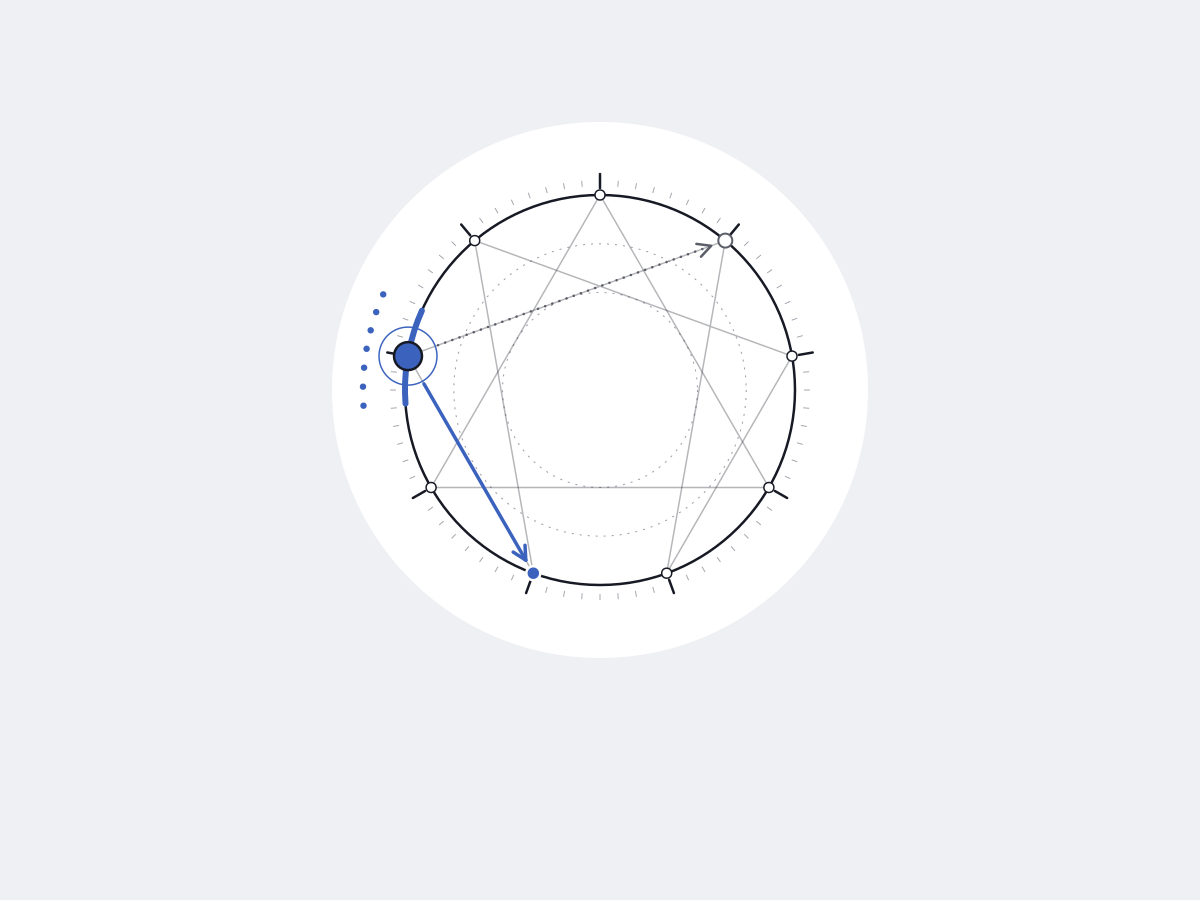
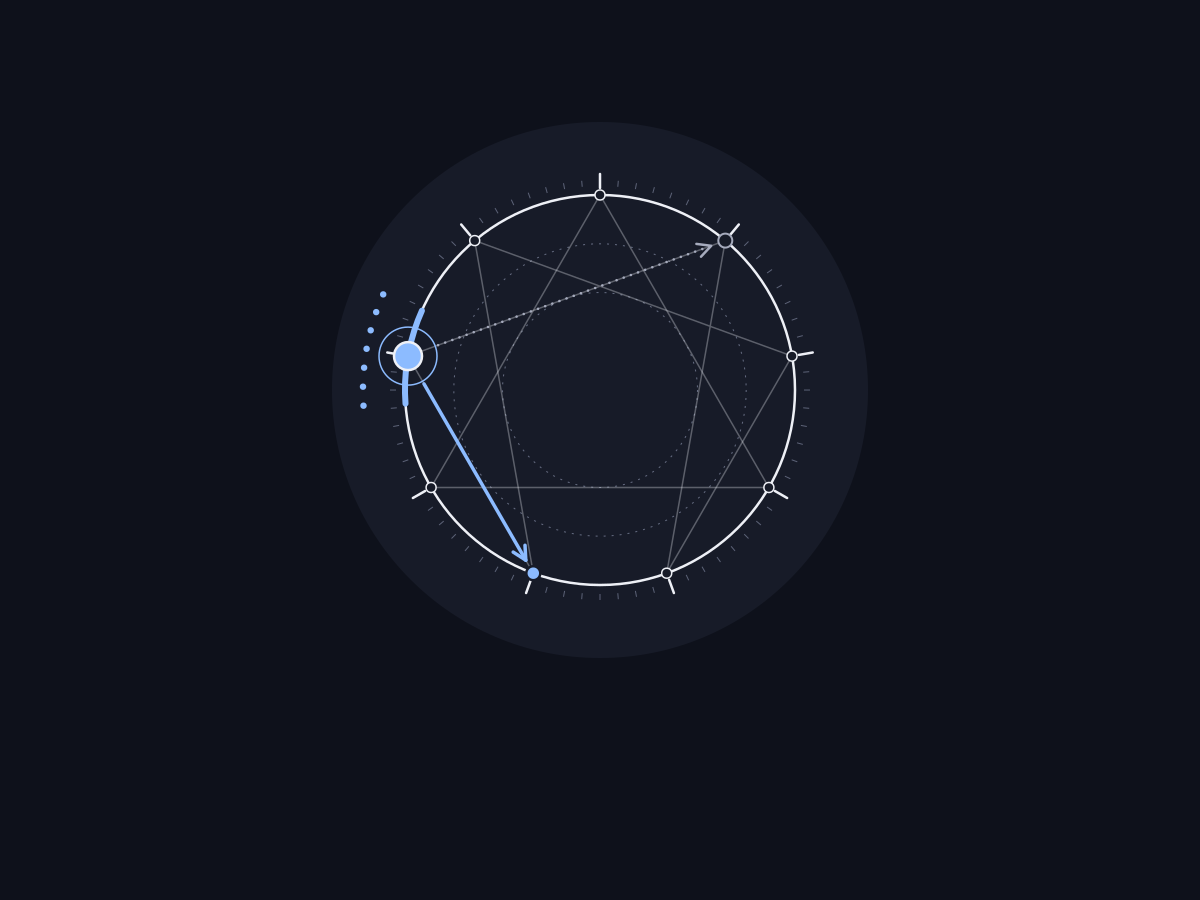
Enneagram Type 7, the Optimist, is one of the nine Enneagram types. Sevens tend to seek freedom, fresh experiences and a sense that good things are always within reach. They often cope with worry by looking ahead to the next plan.
What is a Type 7?
A Type 7 is someone whose attention goes to what could be fun, new or possible. Many Sevens think fast, link ideas in surprising ways and bring energy into a room. Under the bright surface, there is often a quiet wish to avoid feeling trapped or sad. This is a pattern of attention, not a fixed rule.
Picture a Sunday with nothing planned. Some people feel relief. A Seven may feel a small itch. By noon they have texted three friends, found a new taco place and saved a trip idea for next spring. None of this feels like running away. It feels like being alive.
That is the heart of this type. Sevens tend to treat life as a buffet of options. They want to taste a bit of everything. They are often good at reframing a bad day, finding the upside, and getting others to laugh when things are tense.
The gift is real. Sevens can turn a gray week into an adventure. They are quick to see how separate ideas fit together. They tend to bounce back from setbacks faster than most.
The edge is real too. A mind that is always reaching for the next thing can skip past the present one. Hard feelings, slow projects and plain routine can feel like a cage. Many Sevens learn, often later in life, that some of the deepest joy comes from staying put.
Sevens sit in the head center, along with Type 5, The Scholar and Type 6, The Steadfast. The head types share a link to worry and planning. A Five copes by pulling back to think. A Six copes by preparing for what might go wrong. A Seven copes by moving toward the bright side and keeping plenty of options in play.
Type 7 at a glance
| Trait | Type 7, the Optimist |
|---|---|
| Center | Head (thinking and planning) |
| Core fear | Being stuck in pain, boredom or limits |
| Core desire | Freedom, satisfaction and good options |
| Focus | What is next, new and possible |
| Strength | Energy, creative links, resilience |
| Growth edge | Staying present when life is dull or painful |
| Wings | 7w6, 7w8 |
| Stress line | Toward Type 1, The Principled |
| Growth line | Toward Type 5, The Scholar |
| Classic vice | Gluttony: wanting more of every experience |
| Classic virtue | Sobriety: a clear, steady sense of "this is enough" |
What drives a Seven?
Many Sevens are driven by a wish to stay free and keep life full. The core fear is being trapped in pain, boredom or limits. The core desire is freedom and good options. So Sevens tend to keep plans moving, reframe bad news and hold a backup plan. That helps them cope, but it can skip past hard feelings.
Core fear: being trapped
The deepest worry for many Sevens is being boxed in by pain, lack or dullness. It is not always a fear they can name. It shows up as restlessness when a meeting runs long, or a sinking feeling when a plan falls through and nothing replaces it.
Because of this, Sevens often keep a backup plan for the backup plan. A free evening may hold two tentative invites and one solo idea. That way, if one door closes, another is already open.
Core desire: freedom and fullness
What Sevens want is to feel satisfied and free to choose. They want a life with room to move. For many, this means travel, learning, side projects and a wide circle of friends. For others it is quieter: a rich inner world of ideas, books and plans.
Core motivation: keep life moving
Sevens tend to act from a wish to keep things light, varied and forward-moving. They may tell a hard story with a joke at the end. They may plan a trip right after a breakup. This is not fake cheer. It is a real way of coping, and it often works, at least for a while.
The classic vice and virtue
Older Enneagram teaching names a "passion" and a "virtue" for each type. For Type 7 the passion is usually called gluttony. That word is not about food. It means a hunger for more: more fun, more ideas, more experiences, as if the current one is never quite enough.
The virtue is usually called sobriety. Here it means a clear, calm sense that what is in front of you can be enough. A sober Seven still loves joy. They just do not need to stack ten joys on top of each other to feel okay.
How does a Seven deal with hard feelings?
Many Sevens have a fast, almost automatic move when pain shows up. The mind jumps to a reframe. "At least I learned something." "This frees me up for the new job." "Let's grab dinner and forget about it." Each of these thoughts can be true. The trouble comes when the jump happens so fast that the feeling never gets felt.
Some Enneagram teachers call this habit "reframing". Think of it like a skilled editor who keeps cutting the sad scenes from a film. The movie stays upbeat, but the story stops making sense. Friends may notice that a Seven tells a big loss as a funny story, with the hurt edited out.
Why does this happen? For many Sevens, an early lesson was that sadness or need would not be met. So they learned to meet their own needs by finding the next good thing. It was a smart move then. As an adult, it can keep them from the comfort that comes from being seen in pain.
A useful question for a Seven is: "What am I moving away from right now?" The answer is often small and human. A flash of loneliness. A worry about money. A sense of not being enough. Naming it does not ruin the fun. It often makes the fun feel more real, because it is no longer doing two jobs at once.
A day in the life
Here is how this might play out in an ordinary week:
- Monday: A big idea hits in the shower. By lunch, there is a shared doc and three people are excited.
- Wednesday: The idea needs a budget sheet. Energy dips. A new podcast seems more interesting.
- Friday: A friend cancels plans. Within minutes, there is a new plan with someone else.
- Sunday night: A quiet hour alone brings up a vague sadness. The phone comes out.
None of this is wrong. Seeing the pattern simply gives a Seven more choice about what to do next.
How do the wings shape a Seven?
Each type sits between two neighbors on the Enneagram circle. These neighbors are called wings. Most people lean a bit toward one side. Some feel balanced between both. Sevens sit between Type 6 and Type 8.
Type 7 with a 6 wing (7w6)
A Seven who leans toward Six tends to be warmer, more playful and more tied to friends and groups. They may be the one who plans the group trip and checks that everyone is okay. There can be more quiet worry under the fun, and more need for reassurance from people they trust.
At their best, 7w6s mix curiosity with loyalty. They are the friend who shows up with snacks and a silly game when you are sad. On a hard day, they may scatter their energy across too many people and plans. Read more on the 7w6 wing page.
Type 7 with an 8 wing (7w8)
A Seven who leans toward Eight tends to be bolder, faster and more focused on results. They may go after big goals with real force. They are often comfortable taking charge and making quick calls.
At their best, 7w8s turn ideas into action and bring others along. On a hard day, they can push past people's limits, overcommit and get blunt when slowed down. Read more on the 7w8 wing page.
Move the slider to see which wing shapes the type more.
Balanced between 7w6 and 7w8
7w6
A 7w6 is a Type 7 who leans toward Type 6. Many are cheerful, curious and devoted to their friends, mixing a love of new experiences with real loyalty. They bring fun to every group. They grow by staying with hard feelings instead of moving on quickly, and by finishing what they start.
Read more about 7w67w8
A 7w8 is a Type 7 who leans toward Type 8. Many are energetic, confident and quick to turn big ideas into action. They want life at full volume and do not like waiting for permission. They grow by slowing down, listening closely to others and finding satisfaction in what they already have.
Read more about 7w8What happens to a Seven under stress?
Under steady pressure, many Sevens take on traits of Type 1. The easygoing friend can turn picky, tense and critical, of others and of themselves. Plans pile up, then get canceled, and sleep may suffer. This line has a healthy side too: more focus, follow-through and care for doing things well.
On the Enneagram circle, each type has a stress line and a growth line. Under steady pressure, Sevens often move toward some traits of Type 1, The Principled.
This can surprise people. The easygoing friend turns picky and tense. A stressed Seven may start fixing small things, snap at others for doing it "wrong", or make strict rules for themselves. They may judge their own lack of focus very harshly.
What is going on? When the usual escape routes close, the energy has to go somewhere. The Seven tries to force order onto a life that feels out of control. It is a bit like a free-flowing river hitting a dam.
Signs a Seven may be under real stress:
- They stop laughing at things that usually amuse them.
- Their plans get more and more packed, then they cancel most of them.
- They become sharp, critical and impatient with "slow" people.
- They have trouble sleeping because their mind will not stop racing.
- They lean harder on quick comforts: screens, shopping, drinks or nonstop busyness.
The stress line is not all bad. A Seven can borrow the healthy side of Type 1 too: focus, follow-through and a real care for doing things well. The goal is to notice the shift and choose the healthier side on purpose.
How does a Seven grow?
Many Sevens grow by moving toward Type 5. They trade some breadth for depth: finishing one book, staying with one craft and sitting in quiet without reaching for the phone. Fun does not go away. It stops being a way to avoid things, and many Sevens find a calmer joy that lasts longer.
On the growth line, Sevens move toward some traits of Type 5, The Scholar. For a type that loves breadth, this means learning to love depth.
A growing Seven starts to slow down. They pick one book and finish it. They stay with one craft long enough to get truly good. They find they can sit in a quiet room without reaching for their phone. They learn that silence is not empty.
This move also brings a new kind of joy. It is the joy of knowing something well, of being fully in one moment instead of half in five. Many Sevens say this kind of joy is calmer and lasts longer.
Growth here does not mean giving up fun. It means fun stops being a way to avoid things. A Seven who has grown can still plan a wild trip. They can also stay home, feel sad and know it will pass.
What do health states look like for Type 7?
People move through different states over weeks and years. We describe three: thriving, everyday and stressed. None of these is a fixed level. You can shift between them in a single day.
| State | What it can look like for a Seven |
|---|---|
| Thriving | Joyful, grateful and present. Curious and deep. Brings real lightness to others. |
| Everyday | Busy, upbeat and social. Lots of plans. Can skip past hard talks and dull tasks. |
| Stressed | Scattered, restless and impulsive. Turns critical. Uses distraction to numb pain. |
Thriving
A thriving Seven feels grateful for what is here now. They can enjoy a simple walk as much as a big night out. Their optimism is grounded. They see the problem clearly, then look for a way through. Friends feel uplifted around them, not rushed.
Everyday
In an everyday state, Sevens are often fun to be around and busy. Their calendar is full. They juggle many interests. They may change the subject when a talk gets heavy, or start new projects before old ones end. Life is good, but there is a faint sense of always running.
Stressed
When stress builds, a Seven's range of options shrinks. They may grab for anything that brings relief, fast. They can overspend, overbook or overindulge. Their mood may swing from manic plans to flat irritation. If this goes on for a long time, talking with a licensed professional can help.
How do instincts change a Seven?
The Enneagram also looks at three instincts: Self-Preservation, Social and One-to-One (sometimes called sexual). Everyone has all three, but one usually leads. The idea that each type shows up in three instinct-led ways comes from Claudio Naranjo. The descriptions below are our own.
Self-Preservation Seven
These Sevens put their energy into comfort, security and good things close to home. They may be great at finding deals, building a network of helpful contacts, or setting up a cozy, well-stocked life. They often have a practical streak. Under the charm, they may worry about running out. Read more on the Self-Preservation 7 page.
Social Seven
These Sevens tend to channel their energy into groups and causes. They may hold back their own wish for more so they can serve others or a shared ideal. They can be generous and idealistic. Their growth edge is noticing when they give up their own needs to look selfless. Read more on the Social 7 page.
One-to-One Seven
These Sevens focus their spark on a few close bonds. They often dream big about love, places and ideas. They can light up a partner with their vision of the future. The risk is falling for the dream more than the real person. Read more on the One-to-One 7 page.
What is a Seven like in relationships?
In love and friendship, Sevens often bring play, novelty and warmth. Dates with a Seven may involve a new restaurant, a last-minute road trip or a long talk about some wild idea. They tend to be generous and upbeat, and they want the people they love to have fun too.
What Sevens often need from a partner:
- Room to explore, both alone and together.
- Patience when they are excited and talk fast.
- Gentle honesty, not heavy guilt, when something hurts.
- A partner who can laugh with them, and also call them back to the present.
Where things get hard:
- Hard talks. A Seven may joke, change the topic or suggest a fun plan instead of facing a painful issue. Partners can feel brushed aside.
- Commitment worries. Some Sevens fear that choosing one path means losing all others. This can make long-term plans feel heavy.
- Follow-through. Big promises made in a moment of excitement may not happen.
A Seven in a healthy relationship learns to stay in the room when feelings get heavy. They find that sharing sadness can bring people closer than sharing fun. Their partner, in turn, learns that a Seven's lightness is often a form of care, not a lack of it.
Sevens with other types
Every pairing can work. Some combinations bring natural sparks and natural friction. A few to explore:
- Type 1 and 7: opposites on structure and freedom, joined by the stress and growth line.
- Type 3 and 7: two high-energy types who can build a lot, or burn out together.
- Type 5 and 7: breadth meets depth on the growth line.
- Type 7 and 9: easygoing and warm, but both may avoid conflict.
- Type 7 and 8: bold, fast and fun, with some power struggles.
You can also compare any two types with the pair picker on our compatibility page.
What is a Seven like at work?
At work, Sevens often shine in roles that reward ideas, speed and people skills. They may be the one who throws out ten ideas in a brainstorm and gets the room excited. They tend to be good at seeing links between fields, spotting trends and selling a vision.
Common strengths at work:
- Fast, creative problem solving.
- Energy that lifts a team on long projects.
- Comfort with change and new tools.
- A knack for networking and building goodwill.
Common growth edges at work:
- Losing interest once the exciting start is over.
- Saying yes to too many things at once.
- Avoiding tough feedback or dull admin.
- Getting bored in roles with heavy routine and little room to move.
Sevens often do best with a mix of freedom and light structure. A clear goal, short check-ins and variety in tasks can help a lot. Pairing up with a detail-focused teammate can turn their ideas into finished work.
Your Enneagram type can help you talk about how you like to work. It should never be used to decide who gets a job or a promotion. For ideas on roles and work styles, see our Type 7 careers page.
Growth practices for Sevens
These are small, practical things to try. Pick one. That alone is a Seven growth move.
- Finish one thing this week. Choose a small task you started and set aside. Finish it, then notice how it feels.
- Do the "stay for five" check. When you feel the urge to switch tasks or grab your phone, wait five minutes. Notice what feeling you were about to skip.
- Name the feeling under the plan. Before you make a new plan, ask: "What am I feeling right now?" Write one word.
- Keep a gratitude list of plain things. Each night, write three ordinary things you enjoyed. A warm cup of tea counts.
- Go deep, not wide. Pick one interest and give it an hour a week for a month.
- Let a sad moment be sad. When something hurts, try not to fix or reframe it right away. Tell one person how you feel.
- Trim the calendar. Look at next week. Cancel or move one thing to leave some open space.
- Ask for feedback. Ask a friend: "When do I change the subject too fast?" Listen without joking.
Is it Type 7 or another type?
Sevens are most often mixed up with Types 3, 9, 2, 8 and 6. The clearest clue is motive. A Seven is chasing freedom, variety and options, and tends to look past risk or pain. Other types may look just as upbeat or bold, but for a different reason, such as success, harmony or control.
Sevens are sometimes confused with other types. Here are a few common mix-ups.
- Type 7 or Type 3? Both are energetic and goal-driven. A Type 3, The Driver often cares about being seen as successful. A Seven cares more about freedom and options, and may drop a goal that stops being fun. Read more on the 3 and 7 page.
- Type 7 or Type 9? Both can be easygoing and avoid conflict. A Type 9, The Harmonizer tends to slow down and merge with others. A Seven tends to speed up and seek stimulation.
- Type 7 or Type 2? Both are warm and social. A Type 2, The Nurturer focuses on others' needs and being wanted. A Seven focuses more on shared fun and their own sense of freedom.
- Type 7 or Type 8? Both are bold and fast. An Type 8, The Powerhouse leads with control and strength. A Seven leads with enthusiasm and options.
- Type 7 or Type 6? Some Sixes cope with fear by acting bold and cheerful. A Type 6, The Steadfast often scans for risk, while a Seven tends to look past it.
If you are torn between types, our test reports a confidence level and the types closest to your result.
Who is commonly typed as a Seven?
You cannot know someone's type from the outside. Only the person can say what drives them. With that in mind, here are public figures and characters that fans and writers often discuss as Sevens. Treat these as conversation starters, not facts.
- Robin Williams is often typed as a Seven for his rapid-fire wit and boundless energy on stage.
- Richard Branson is commonly typed as a Seven, sometimes with an 8 wing, for his love of adventure and many ventures.
- Peter Pan, the boy who never wants to grow up, is a classic fictional example.
- Tigger from Winnie-the-Pooh is a well-known cartoon pick for this type.
Others type some of these people differently. That is part of the fun of the discussion.
How reliable is a Type 7 result?
The Enneagram is a useful map for self-reflection. Research on it is mixed, and no test can tell you for sure who you are. A good result should feel like a starting point you can test against your own life. Our methodology page explains how our test works and what it can and cannot do. See our methodology for details.
If the Seven description fits, try reading the pages for Types 3, 6 and 9 too. Notice which one feels true on your hardest days, not just your best ones.
Frequently asked questions
What is Enneagram Type 7?
Type 7, the Optimist, is a head-center type. Sevens tend to look for freedom, new experiences and good options, and they often handle worry by planning the next fun thing.
What is the core fear of a Type 7?
Many Sevens fear being trapped in pain, boredom or limits. They tend to keep several doors open so they never feel stuck.
What are the two Type 7 wings?
A Seven can lean toward Type 6 (7w6), which is warmer and more loyal, or toward Type 8 (7w8), which is bolder and more driven.
What happens to a Seven under stress?
Under stress, many Sevens take on traits of Type 1. They can turn critical, rigid and short with people who seem to slow them down.
How does a Type 7 grow?
Many Sevens grow by moving toward Type 5. They slow down, go deep on one thing and find that less can feel like enough.
Are Sevens just shallow party people?
No. Many Sevens are curious, skilled and serious about their work. The urge to keep things light is often a way to manage worry, not a lack of depth.
Which types get along best with Sevens?
Any type can build a good bond with a Seven. What matters most is how healthy each person is and how well they talk about needs, not the type pairing itself.