Type 2
Enneagram Type 2: The Nurturer
Type 2, the Nurturer, wants to feel loved by caring for others. Learn the core fear, wings, stress and growth lines, and how Twos grow.
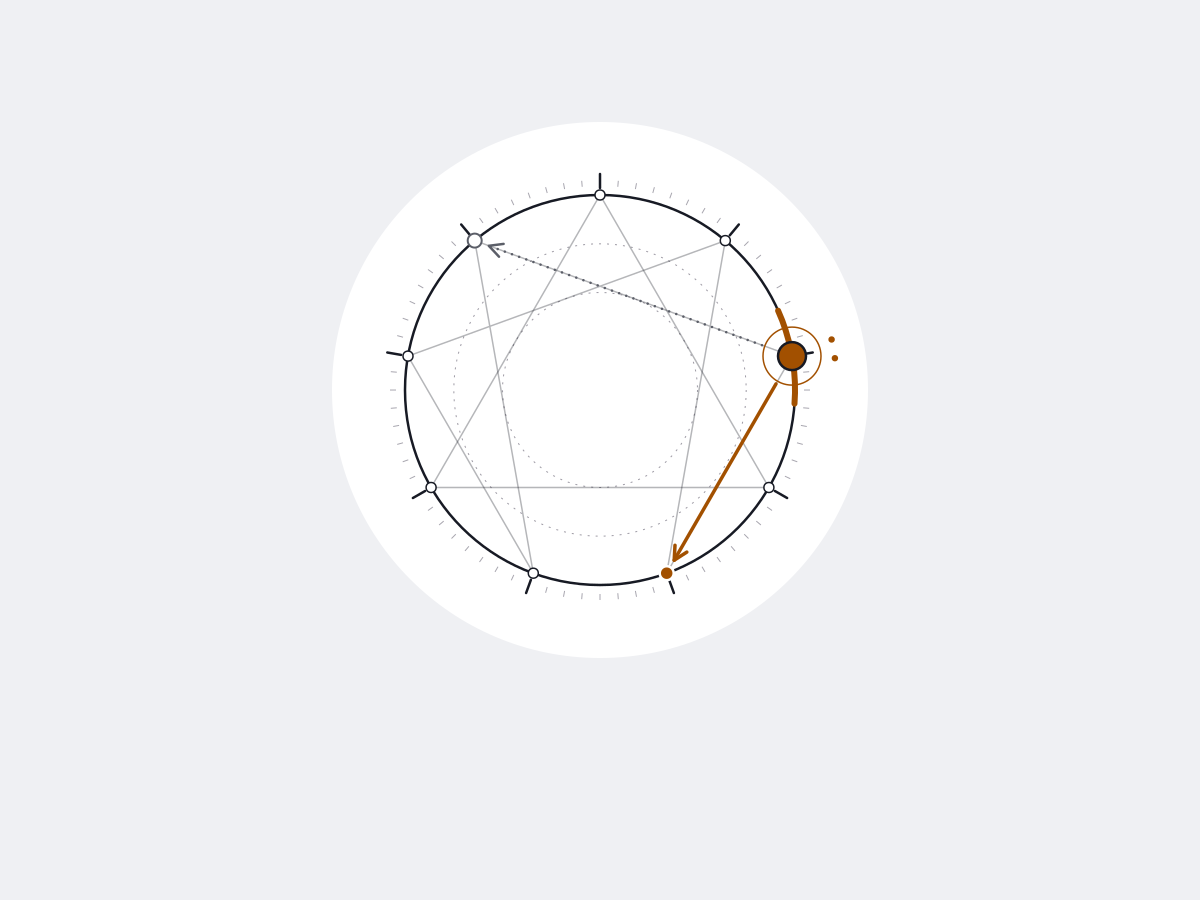
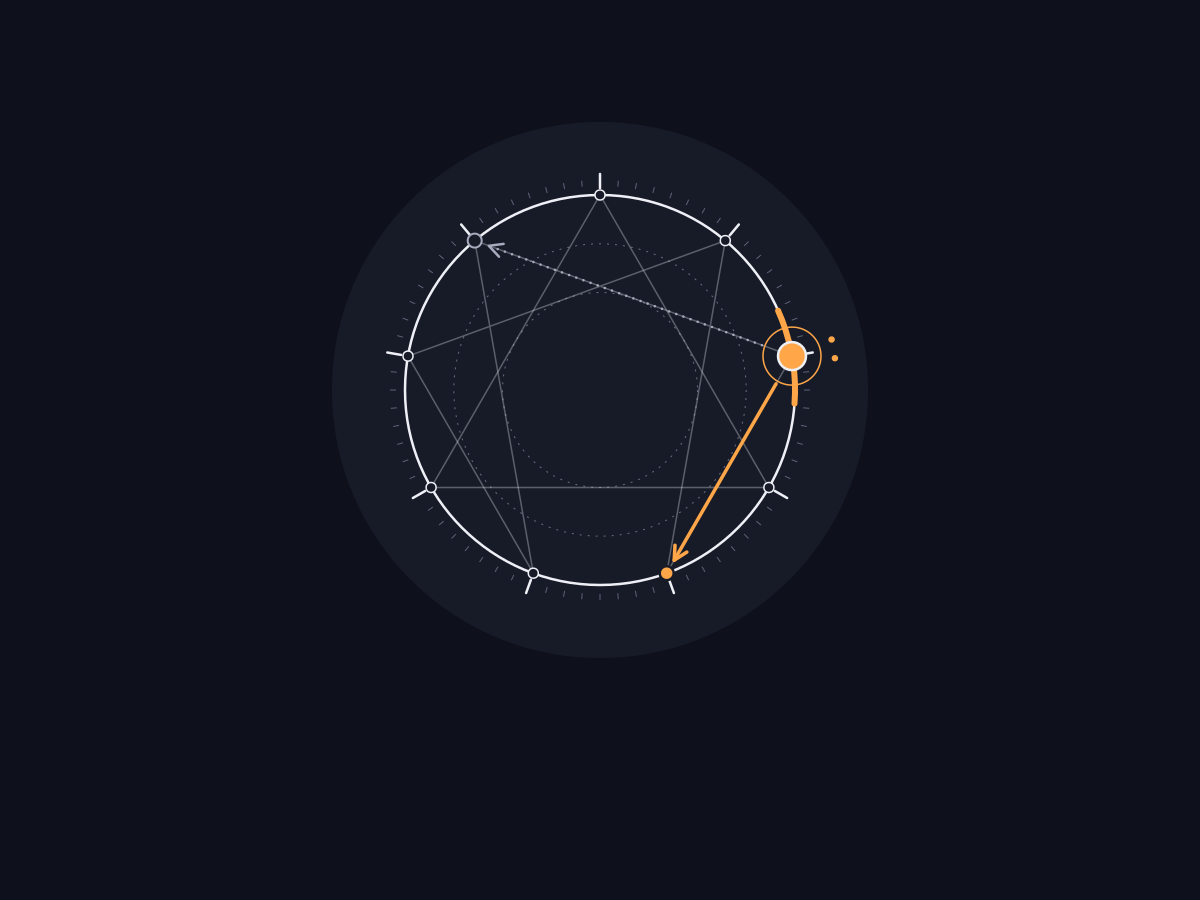
Enneagram Type 2, the Nurturer, is one of the nine Enneagram types. Twos tend to focus on relationships and on what the people around them need. They often feel most like themselves when they are helping, caring or making someone feel welcome.
What is a Type 2?
A Type 2 is someone whose attention goes to other people's feelings and needs. Many Twos are warm, generous and good at making people feel cared for. Their challenge is that they can give so much that they forget to ask what they need. The pattern shows up differently in every person.
Think of the friend who notices you look tired before you say a word. They make you tea, ask how your week went and remember the name of your sister's new baby. You leave feeling a little lighter. That kind of quick, warm attention is what many people picture when they think of Twos.
Twos belong to the heart center, along with Types 3 and 4. Heart types tend to care about image and connection: how they are seen and how they relate. For Twos, the question underneath is often "Am I loved? Am I wanted here?" Helping is one way they answer it.
Most Twos would not describe themselves as needy. In fact, many say they are the one others lean on. They may feel more comfortable giving than receiving. A compliment can make them squirm. A request for help, on the other hand, can make them feel useful and alive.
That giving is often sincere. Twos really do care. Growth for a Two is not about caring less. It is about caring for themselves too, and noticing when their help comes with strings they did not mean to attach.
Type 2 at a glance
| Trait | Type 2 |
|---|---|
| Center | Heart |
| Core focus | Connection and meeting others' needs |
| Core fear | Being unwanted or unloved |
| Core desire | To feel loved and close to others |
| Wings | 2w1, 2w3 |
| Stress line | Type 8, The Powerhouse |
| Growth line | Type 4, The Original |
| Common gift | Warmth, generosity and emotional radar |
| Common trap | Over-giving and hidden resentment |
| Vice to virtue | Pride to humility |
What drives a Type 2?
Twos are driven by a wish to feel loved and to matter to the people they care about. Their core fear is being unwanted or unneeded. So they often reach toward others first, offering help and warmth. Underneath, many Twos hope that if they give enough, they will be loved in return.
Core fear
The core fear of Type 2 is being unwanted: left out, unneeded or unloved. This can sit quietly in the background until someone pulls away. Then a Two may feel a sharp worry that they did something wrong, or that they were never really valued in the first place.
Core desire
The core desire is to feel loved and close. Twos want warm, real connection. When they feel truly wanted for who they are, not for what they do, many Twos describe a deep sense of calm.
Core motivation
Day to day, this shows up as a pull to support others and to matter in their lives. A Two might drop everything to help a friend move, or stay up late listening to a coworker's worries. They often know what others need before those people know it themselves.
Pride and humility
The traditional vice linked to Type 2 is pride. This is not the loud, boastful kind. It is a quiet belief that "I do not need help, but you need me." It can keep a Two in the giver role and away from their own needs. It can also make them feel hurt when their help is not welcomed.
The matching virtue is humility. For a Two, humility means accepting that they have needs, just like everyone else. It means being able to receive care and admit, "I could use some help too."
What are the Type 2 wings?
The two Type 2 wings are 2w1 and 2w3. A wing is one of the two types next to yours on the circle. Twos with a 1 wing tend to be more principled, dutiful and private in how they help. Twos with a 3 wing tend to be more outgoing, charming and focused on success.
Many Twos lean toward one wing more than the other. Some feel a mix of both. Either way, the core Two motive of connection stays at the center.
2w1
A Two with a One wing often helps in quiet, practical ways. They may feel a strong sense of duty and hold themselves to high moral standards. Many 2w1s serve behind the scenes and can be self-critical when they feel they have not done enough. They may also feel uneasy about wanting thanks. Read more on the 2w1 wing page.
2w3
A Two with a Three wing tends to be more social, energetic and visible. They are often great hosts and connectors who remember everyone's name. Many 2w3s also care about how they come across and want to be seen as successful and likable. Read more on the 2w3 wing page.
Move the slider to see which wing shapes the type more.
Balanced between 2w1 and 2w3
2w1
A 2w1 is a Type 2 who leans toward Type 1. Many are caring, responsible and quietly principled, helping because it feels like the right thing to do. They tend to work behind the scenes. They grow by admitting their own needs and by letting go of the inner rule that love must always be earned.
Read more about 2w12w3
A 2w3 is a Type 2 who leans toward Type 3. Many are sociable, charming and quick to make others feel welcome. They connect people, lift moods and get things moving. They grow by noticing when giving turns into performing and by believing they are worth loving even when they are not useful.
Read more about 2w3What happens to a Two under stress?
Under ongoing stress, many Twos move along their stress line toward Type 8. After long stretches of giving, they may feel used or unseen. They can then become blunt, demanding or openly angry. This shift is often a sign that their own needs have gone unmet for too long.
A Two in stress may first try harder to help. When that does not bring the closeness they want, frustration builds. Moving toward Type 8 can feel like a dam breaking. Words come out sharper than they meant. They may try to take control of a situation they used to manage gently.
Signs of the stress line in a Two can include:
- Listing everything they have done for someone, out loud or in their head
- Feeling angry that no one notices how tired they are
- Pushing hard to get their way, then feeling guilty about it
- Pulling away from people they usually care for
This shift carries useful information. The anger is often pointing at a real need that has been ignored. A Two who notices "I am starting to keep score" can pause and ask what they actually want.
How does a Two grow?
Along the growth line, Twos take on healthy traits of Type 4. They turn their attention inward, name their own feelings and get honest about what they need. Growth for a Two often means learning that they are worth loving even when they are not helping anyone.
Growth toward Type 4 looks like self-knowledge. A Two on the growth line may spend time alone without feeling guilty. They might start a creative project just for themselves. They begin to notice the difference between "I want to help" and "I am afraid of what happens if I do not."
Growth here is a direction, not a finish line. Most Twos move back and forth. Each time they choose honesty over automatic giving, it gets a little easier.
What do the health states look like for Type 2?
When thriving, Twos give freely and also take good care of themselves. In everyday mode, they are warm and helpful, with a growing habit of putting themselves last. When stressed, they can feel unappreciated, become intrusive or controlling, and give mainly to feel needed. Most Twos move through all three.
| Health state | What it can look like in a Two |
|---|---|
| Thriving | Warm and generous without strings. Can say no kindly. Lets others care for them too. |
| Everyday | Friendly, attentive and busy helping. Finds it hard to ask for things. Likes being thanked. |
| Stressed | Over-involved in others' lives. Feels unseen or used. Flips between people-pleasing and anger. |
These states are snapshots, not stages. You may pass through all three in one busy week. The value is in noticing where you are and what you need right now.
How do the instincts shape Type 2?
Every type has three instinct variants: Self-Preservation, Social and One-to-One. For Twos, the instinct you rely on most shapes how you seek closeness. Some Twos want to be cared for in small, personal ways. Others seek a valued place in a group. Others pour themselves into one deep bond.
Claudio Naranjo is credited with the concept of instinctual subtypes. The descriptions below are our own and are meant as a rough guide, not a rulebook.
Self-Preservation Twos
Self-Preservation Twos can seem younger, more playful or more hesitant than other Twos. They often want to be looked after as much as they look after others. They may give in quiet ways and feel shy about taking up space.
Social Twos
Social Twos look for a respected place in their community. They may be leaders, organizers or the person everyone turns to for advice. Their helping can be large in scale, and they often care about being seen as capable and generous.
One-to-One Twos
One-to-One (sometimes called sexual) Twos focus their energy on a few close people. They can be charming, intense and devoted. They often put a lot into winning and keeping a deep bond, and may feel especially hurt if that bond feels threatened.
What are Twos like in relationships?
In relationships, Twos tend to be affectionate, attentive and generous. They remember details and show love through care. Their challenge is speaking up for their own needs instead of hoping a partner will guess. Many Twos do best with people who notice them, thank them and invite them to rest.
A Two partner often makes love visible. They plan the surprise, cook the favorite meal and check in after the hard meeting. They are usually quick to sense when something is off. That radar is a gift, though it can also make them feel responsible for everyone's mood.
Patterns many Twos notice in close relationships:
- They give first. Often before they are asked, and sometimes before they are sure it is wanted.
- They hint instead of asking. They may hope their partner will notice what they need.
- They feel rejection deeply. A cool reply can sting more than it should.
- They light up with appreciation. A simple thank you can carry them for days.
Tips for loving a Two
- Ask them what they need, then wait. They may need a moment to find an answer.
- Thank them specifically: "I loved that you remembered my interview."
- Offer help without waiting for them to ask.
- Make it safe for them to say no. It is often harder for a Two than it looks.
For specific pairings, see the 1 and 2 compatibility page, the 2 and 8 page or the 2 and 9 page. Any two types can build a strong bond. Self-awareness matters more than the pairing.
What are Twos like at work?
At work, Twos are often the people who hold a team together. They notice who is struggling, build trust and make others feel valued. Their growth edge is setting limits, asking for credit when it is due and remembering that their own goals deserve as much care as anyone else's.
Many Twos make a workplace feel human. They welcome new people, remember birthdays and smooth over tension. They often sense team dynamics early and can be skilled at bringing people together around a shared goal.
Common strengths at work:
- Building warm, trusting relationships
- Reading people and team moods quickly
- Encouraging and supporting others' growth
- Going the extra mile when someone needs help
Common growth edges at work:
- Saying yes to too many requests
- Feeling hurt when their help goes unnoticed
- Avoiding direct conflict or hard feedback
- Putting their own projects and career last
Twos can do well in any field. Work that lets them connect with people tends to suit them, as long as they also have room to say no. Type is a tool for understanding how you communicate and what drains you. It should never be used to choose or screen people for roles. See careers for Type 2 for more ideas.
What are common myths about Type 2?
A common myth is that Twos are endlessly selfless pushovers. In fact, many Twos are strong, opinionated and fiercely protective. Their giving is real, but it is often tied to a need to feel close. Another myth is that only women are Twos. The type shows up in people of every gender and background.
Twos are easy to sum up as "nice," which hides a lot of what makes them who they are. These ideas are worth a second look.
Myth: Twos are pushovers. Many Twos have a will of iron when someone they love is threatened. They may speak up loudly for a friend while staying quiet about their own needs. That mix can surprise people who expect them to be soft.
Myth: Twos are always selfless. Twos give a lot, and they mean it. Yet many also hope, often without noticing, that their care will be returned. Seeing this is not a mark against them. It is a human need, and naming it helps a Two give more freely.
Myth: Only women are Twos. The urge to nurture and connect has no gender. Men who are Twos may show it as coaching, mentoring or being the friend who drives across town at midnight. Older stereotypes can make it harder for them to recognize the type in themselves.
Myth: Twos are always cheerful. A Two can be warm on the outside while feeling lonely, tired or hurt on the inside. Because they focus on others, people may not think to ask how they are doing. Asking can mean a great deal.
Myth: Twos want to be in charge of everyone. Some Twos do get over-involved when stressed. Most of the time, though, their attention to others is an offer, not a takeover. A simple "thanks, I have got this" usually lands fine when it is said kindly.
Is Type 2 commonly confused with other types?
Yes. Twos are often confused with Types 9, 7 and 4. All of them can seem friendly or emotional. The key is the motive. Twos reach out to be close and needed. Nines go along to keep the peace. Sevens seek fun and options. Fours look for depth and a sense of identity.
| Question | Type 2 | Type 9 | Type 7 | Type 4 |
|---|---|---|---|---|
| Why help others? | To be close and needed | To keep things calm | Because it is fun and social | When it feels meaningful |
| What hurts most? | Feeling unwanted | Conflict and pressure | Feeling trapped or bored | Feeling ordinary or unseen |
| How do they handle their needs? | Put them last | Forget they have them | Chase them quickly | Focus on them deeply |
If more than one column fits, that is common. Ask yourself what you feel when someone you care about does not need you anymore. Twos often feel a quiet panic. That reaction can be a useful clue.
What growth practices help a Type 2?
Helpful practices for Twos build self-awareness and permission to receive. Examples include pausing before offering help, checking in with your own feelings each day, asking for one small thing a week and saying no once without explaining. Gentle, repeated practice tends to work better than big changes.
Pick one practice and try it for a week:
- Pause before you offer. Count to three and ask, "Was I asked? Do I want to?"
- Check in with yourself. Once a day, write one line: "Today I feel... and I need..."
- Ask for one thing. Each week, ask someone for a small favor, then let them do it their way.
- Say a clean no. Turn down one request without a long reason or apology.
- Spend time on you. Do something you enjoy that does not involve taking care of anyone.
- Notice the hidden ask. When you give, ask yourself whether you are hoping for something back.
These ideas are for self-reflection. If you feel worn out or resentful for a long stretch, a licensed professional can be a good person to talk with.
Which famous people are commonly typed as Type 2?
Public figures and fictional characters often typed as Twos include Dolly Parton, Mother Teresa and Molly Weasley. These are guesses made by fans and writers from what they see in public. Nobody can confirm another person's type, and these examples are often debated.
A few names that come up often. Use them to start a conversation, not to settle one:
- Dolly Parton is often typed as a Two for her warmth and famous generosity.
- Mother Teresa is often typed as a Two for her lifelong focus on caring for others.
- Molly Weasley (fictional) is often typed as a Two for her fierce, motherly care.
- Fred Rogers is sometimes typed as a Two for his gentle attention to children's feelings, though others see him as a Nine.
These examples are guesses. The more useful question is which traits people are pointing to, and whether those traits feel true for you.
How can you tell if you are a Type 2?
You may be a Type 2 if you often sense what others need before they say it and feel a strong pull to help. Finding it hard to ask for things, feeling hurt when help goes unnoticed and lighting up when someone needs you are common signs. The test can help you check.
Ask yourself:
- Do I know what my friends need more easily than what I need?
- Do I feel uneasy when someone offers to help me?
- Do I feel hurt if my care is not noticed or returned?
- Do I sometimes help even when I am exhausted?
If these sound familiar, Type 2 may fit. Remember that research on the Enneagram is mixed. A systematic review by Hook and colleagues points to some encouraging findings along with real gaps. Treat your type as a starting point for reflection. Our test shows how clearly you match each type, so you can see whether Two or a neighbor fits you better.
Frequently asked questions
What is Enneagram Type 2?
Type 2, the Nurturer, is a heart-center type focused on connection. Twos tend to be warm, generous and quick to sense what other people need.
What are the two Type 2 wings?
Twos can lean toward 2w1, which is more principled and dutiful, or 2w3, which is more outgoing, social and goal-minded.
What does a Two look like under stress?
Under stress, many Twos take on traits of Type 8. They can become blunt, controlling or openly angry when they feel taken for granted.
How do Twos grow?
Many Twos grow by moving toward Type 4. They turn inward, name their own feelings and needs, and give from choice rather than worry.
Are Twos people-pleasers?
Some Twos fall into people-pleasing, especially under stress. Healthy Twos give freely and can also say no without guilt.
Which types are most often confused with Type 2?
Twos are often confused with Type 9, Type 7 and Type 4. The main clue is that Twos focus on being needed and close to specific people.