Type 4
Enneagram Type 4: The Original
Type 4, the Original, wants a life that feels true and personal. Learn the core fear and desire, wings, stress and growth lines, and how Fours grow.
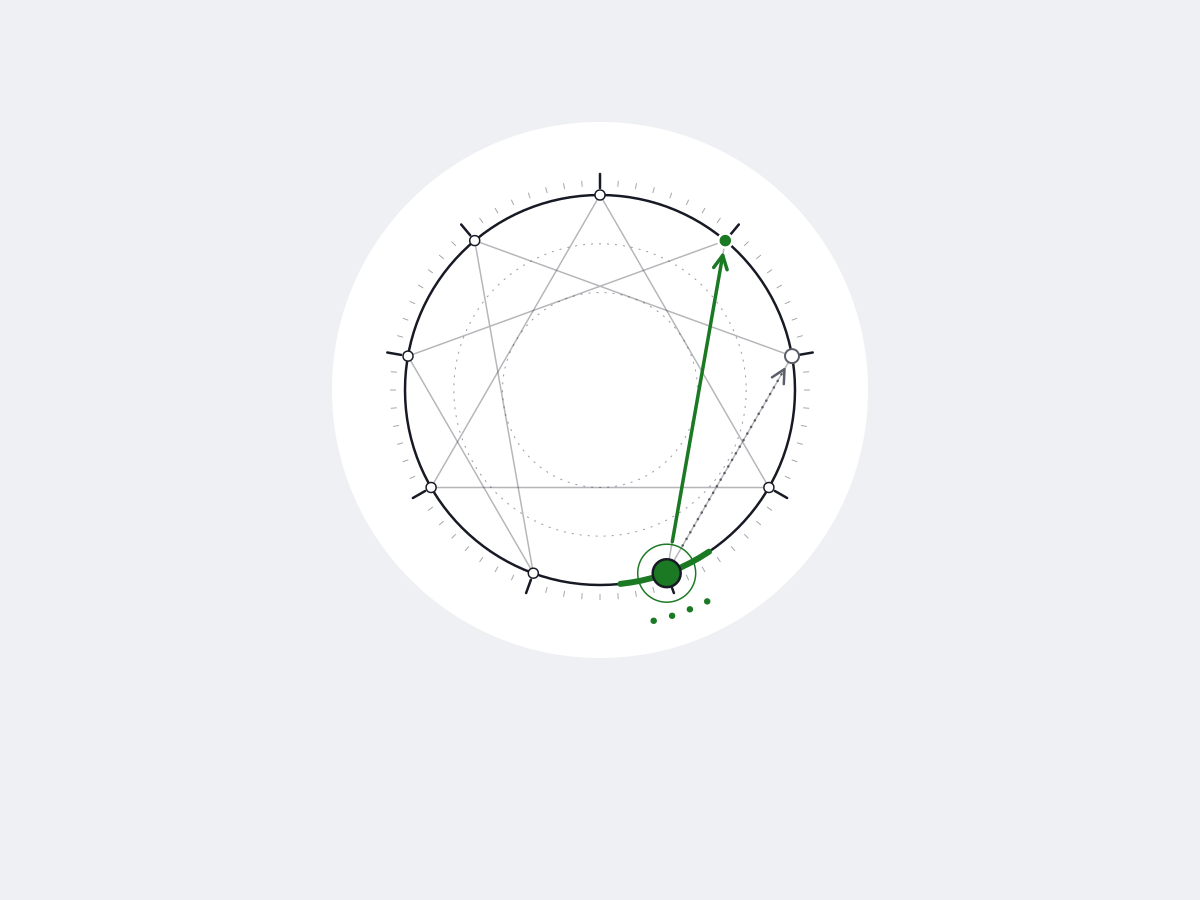

Enneagram Type 4, the Original, is a heart-center type driven by the wish to know who they are and to live by it. Fours tend to notice what is missing, feel emotions fully and look for meaning and beauty in ordinary life.
What is a Type 4?
A Type 4 is a person whose attention keeps returning to identity and feeling. Many Fours ask "Who am I, really?" more often than most people. They value honesty about emotions, dislike small talk that hides what is going on, and want their life to say something personal. Each Four lives this pattern a little differently.
Picture a friend who notices that you went quiet at dinner and asks about it later, gently, when no one else is around. Or the coworker who rewrites a bland slide deck until it has a voice. Or the person who keeps a playlist for every season of their life. Those are small, everyday signs of the Four pattern.
Fours belong to the heart center, with Type 2 and Type 3. All three heart types care about image and how they are seen. Twos want to be seen as caring. Threes want to be seen as successful. Fours want to be seen as they truly are, flaws and all, and they often feel no one quite gets there.
Not sure this is you? You can take the test and compare your results with this page.
Type 4 at a glance
| Trait | Type 4 |
|---|---|
| Center | Heart (feeling) |
| Core fear | Being ordinary, unseen or missing something essential |
| Core desire | To know who they truly are and to live by it |
| Vice | Envy |
| Virtue | Equanimity |
| Wings | 4w3, 4w5 |
| Stress line | Toward Type 2, The Nurturer |
| Growth line | Toward Type 1, The Principled |
| Key strength | Emotional honesty and a gift for meaning |
| Growth edge | Comparing themselves with others and waiting for a mood |
What drives a Type 4?
Fours are driven by a fear of being ordinary or unseen and a desire to know who they truly are. Their core motivation is to make their inner life visible and find meaning in what they feel. The traditional vice is envy, and the virtue they grow toward is equanimity, or emotional balance.
Every type has a core fear and a core desire. They work like a compass. You may not think about them, but they shape where your attention goes when you walk into a room.
Core fear: being ordinary or missing something
Many Fours carry a quiet sense that something is missing in them. Other people seem to have an easy belonging or a simple confidence that the Four lacks. The fear is not only of being "average." It is of being unseen, of living a life that could belong to anyone.
This fear can show up as a strong reaction to being lumped in with others. A Four may bristle when a friend says "Oh, everyone feels that way." To the Four, that line can feel like their inner world just got erased.
Core desire: to find and live a true self
The flip side is a deep wish to know who they are and to live by it. Fours often try on styles, ideas and creative forms to find the ones that feel like home. When something fits, it can feel like a click of recognition.
Core motivation: making the inner life visible
Fours want what they feel to matter and to be expressed. That might be through art, but just as often it is through how they decorate a room, write a text, cook a meal or listen to a friend. They tend to trust feelings as information, and they want others to take feelings seriously too.
Vice and virtue: envy and equanimity
The traditional vice linked with Type 4 is envy. For a Four, envy is less about wanting someone's car and more about a painful sense that others got something essential that they did not: a happy family, a clear calling, an easy way of being.
The virtue is equanimity, which means emotional balance. It is not about feeling less. It is the ability to feel a wave without being pulled under by it, and to see that your own life already holds enough to work with.
What are the strengths of a Type 4?
Common Type 4 strengths are emotional honesty, comfort with hard feelings, creativity, an eye for beauty and loyalty to what feels real. Many Fours make room for grief and pain that others rush past, which helps the people around them feel understood instead of fixed.
Fours bring real gifts to the people around them. Many are:
- Emotionally honest. They can name hard feelings that others avoid, which makes room for real talk.
- Good with pain. They tend not to rush a grieving friend. They can sit with sadness without trying to fix it.
- Creative. They see new angles and like to make things that carry a personal stamp.
- Attuned to beauty. A good line in a song or the light at the end of a day can move them.
- Loyal to what is real. They would rather have one true conversation than ten polite ones.
What are the growth edges of a Type 4?
Typical Type 4 growth edges are comparing themselves with others, waiting for the right mood before acting, clinging to what is missing, testing people by pulling away and treating a strong feeling as a fact. These are habits that get stuck, not proof that a Four is broken.
The same depth that makes Fours insightful can also trap them. Common growth edges include:
- Comparing. Looking at others and feeling that they come up short.
- Waiting for a mood. Putting off work until they feel inspired, which may not come.
- Holding on to longing. Getting more attached to what is missing than to what is here.
- Pushing people away to test them. Withdrawing to see who will come looking.
- Making feelings the whole story. Treating a strong feeling as a fact about the world.
None of these make a Four broken. They are just the places where the pattern tends to get stuck.
How do the wings change a Type 4?
A Four's wings are Type 3 and Type 5. A 4w3 tends to be more outgoing, expressive and aware of image, with drive to share their work. A 4w5 tends to be more private, thoughtful and inward. Most Fours lean toward one wing, and some feel balanced between both.
Your wings are the two types next to yours on the Enneagram circle. For Fours, that means Type 3 and Type 5. Most people lean a bit more toward one wing, though some feel balanced.
Move the slider to see which wing shapes the type more.
Balanced between 4w3 and 4w5
4w3
A 4w3 is a Type 4 who leans toward Type 3. Many are expressive, stylish and eager to share their inner world through visible work, art or presence. They want to be seen as truly unique. They grow by valuing steady effort over dramatic moments and by finding worth that does not depend on being noticed.
Read more about 4w34w5
A 4w5 is a Type 4 who leans toward Type 5. Many are private, thoughtful and drawn to unusual ideas, art and inner experience. They often need lots of time alone to make sense of feelings. They grow by stepping into everyday life, sharing what they find, and trusting they belong even when they feel different.
Read more about 4w54w3: the expressive Four
A 4w3 adds some of Type 3's drive and social energy. These Fours often want their inner life to be seen and admired, not just felt. Many are drawn to performing, design, writing for an audience or any work where style meets results.
A 4w3 may be more aware of image and more willing to compete. They can move between moods quickly, from a bright public face to a private low. Their growth often lies in letting their worth rest on more than how their work is received.
4w5: the inward Four
A 4w5 adds some of Type 5's need for privacy and thought. These Fours often live more in their heads, enjoy long stretches alone and care about ideas as much as feelings. Many are drawn to research, writing, music made in a back room or any craft that rewards patience.
A 4w5 may be quieter and harder to read. They can seem detached, even when a lot is happening inside. Their growth often lies in letting people in before the thought or the art is finished.
What happens to a Type 4 under stress?
Under stress, Fours move along the stress line toward Type 2. They may seek reassurance, over-give in the hope of feeling wanted, and feel hurt or resentful when their care goes unnoticed. Spotting this shift is a useful cue to rest, ask plainly for what they need and check their story.
The Enneagram uses lines between types to describe shifts under stress and in growth. For Fours, the stress line points toward Type 2, The Nurturer.
When a Four is worn out, they may start acting like a Two on a hard day. They can:
- reach out for reassurance more than usual
- over-give, hoping to feel wanted in return
- feel hurt and resentful when their care is not noticed
- swing from "I don't need anyone" to "Why doesn't anyone show up for me?"
Here is how that can look. A Four who has spent weeks alone on a project suddenly floods a friend with texts and gifts. When the friend is slow to reply, the Four reads it as proof that they do not matter.
This shift is not a flaw to be ashamed of. It can be a useful signal. When you notice it, it may be time to rest, ask clearly for what you need, and check the story you are telling yourself.
Some teachers also note that the stress point holds a gift. A Two's warmth can help a Four step out of self-focus and notice other people's needs, once the Four is less depleted.
What does growth look like for a Type 4?
In growth, Fours move along the growth line toward Type 1. They often build steady routines, act before the mood arrives, use clear standards to finish work and focus on what can be done today. They keep their emotional depth and gain a frame that lets them share it.
The growth line for Fours points toward Type 1, The Principled. When a Four is in a good place, they often pick up some of the One's steadiness and follow-through.
Growth here tends to look like:
- Acting before the mood shows up. Writing for twenty minutes even when it does not feel inspired.
- Building small routines. Regular sleep, meals and work hours that hold steady through emotional weather.
- Using clear standards. Asking "Is this good and finished?" instead of "Does this capture everything I feel?"
- Focusing on the present. Spending less time on what is missing and more on what can be done today.
A Four who grows this way does not lose their depth. They keep it, and they add a frame that lets them share it more often and more fully.
What are the health states of a Type 4?
We describe three health states. A thriving Four is creative, grounded and able to enjoy the ordinary. An everyday Four is self-aware and drawn to beauty but prone to comparing. A stressed Four may withdraw, sink into longing and push people away. Most Fours move between all three.
We describe health states as thriving, everyday and stressed. These are not fixed levels. You may move through all three in one week, or even one day.
| State | What it can look like in a Four |
|---|---|
| Thriving | Creative, grounded, emotionally honest and able to enjoy the ordinary |
| Everyday | Moody at times, self-aware, drawn to beauty, prone to comparing and wanting more |
| Stressed | Withdrawn, stuck in longing, harsh with themselves, pushing others away to test them |
Thriving
A thriving Four turns feeling into something that helps others. They can be playful and light, which surprises people who expect Fours to be serious. They accept that their life is unique without needing it to be dramatic.
Everyday
Most of the time, a Four lives in the middle. They notice beauty and meaning, but they also notice gaps. They may spend a Sunday rearranging their room so it feels more like them, then feel a pang scrolling through a friend's photos.
Stressed
Under heavy stress, a Four may pull away and sink into feelings that feel bottomless. They may decide that no one understands them, and then act in ways that keep people from trying. If you are in that place for a long time, talking to a trusted friend or a licensed professional can help. The Enneagram is a reflection tool. It is not a substitute for real support.
How do the instincts shape a Type 4?
The three instincts color how a Four shows up. A Self-Preservation Four tends to hold feelings in and endure hardship quietly. A Social Four focuses on where they fit and may compare openly. A One-to-One Four brings intensity, passion and open competitiveness to close bonds.
Many teachers describe three instincts that shape how each type shows up. The idea of instinctual subtypes is often credited to Claudio Naranjo. In our own words, here is how each one can color a Four.
Self-Preservation Four
A Self-Preservation Four often keeps their feelings to themselves and puts up with hardship quietly. They may seem steadier and less dramatic than other Fours. Their longing can show up as working hard on their home, health or comfort, and they may be very hard on themselves in private.
Social Four
A Social Four tends to focus on where they fit in a group. They may compare themselves openly with others and feel the gap sharply. They can be deeply honest about pain and may feel most at home in groups that value sensitivity.
One-to-One Four
A One-to-One Four (sometimes called sexual) brings intensity to close bonds. They may be more openly competitive and more expressive about what they want. Their feelings can come out strong, as passion, anger or devotion, rather than being held back.
What are Type 4s like in relationships?
In relationships, Fours tend to want depth over ease. They remember details, show up for hard talks and hope to be seen without explaining everything. Common challenges are a push-pull with closeness, testing bonds and feeling hurt when dismissed. Clear asks and honest reflection help both sides.
In love and friendship, Fours often want depth over ease. They tend to remember what you told them months ago. They show up for hard conversations. They want to be seen without having to explain everything.
Common patterns in close relationships:
- A push and pull. A Four may feel drawn to someone, then pull back when the person gets close. Some describe this as wanting what is out of reach.
- High standards for connection. Small talk can feel lonely to them. They may test a bond by sharing something raw and watching how the other person responds.
- Strong reactions to feeling dismissed. Being told to "cheer up" can feel like rejection.
What helps a Four in a relationship:
- reflect back what they said before you offer advice
- make room for their moods without making them the center of every day
- share your own feelings honestly; Fours trust people who do
- notice and name what makes them unique, sincerely and without flattery
What a Four can practice:
- say what you need directly instead of waiting to be guessed
- notice when you are focusing on what a partner lacks, and name one thing they give
- stay in the room during conflict, even when you want to withdraw
Curious how Fours pair with other types? Read about Type 4 and Type 5, Type 4 and Type 9 or Type 2 and Type 4.
What are Type 4s like at work?
At work, many Fours want meaning more than status. They often shine at giving projects a voice, sensing when something is off and supporting colleagues. They may struggle with dull, repeated tasks and feedback that feels personal. Sharing the purpose behind a task and giving specific feedback tends to help.
At work, many Fours want meaning more than status. They tend to do their best work when they care about the mission and have room to bring their own voice.
Fours often shine at:
- giving a project a clear voice, look or feel
- noticing when something is "off," in a design, a message or a team mood
- supporting colleagues through a hard time
- asking the question that no one else will ask
They may struggle with:
- dull, repeated tasks with no visible purpose
- feedback that feels like it is aimed at who they are, not what they did
- deadlines that arrive before inspiration does
A manager or teammate can help by sharing the "why" behind a task, giving specific feedback on the work itself, and allowing some flexibility in how the work gets done. Types describe tendencies, so use them for self-awareness and communication, never for decisions about who gets a role. See careers for Type 4 for more ideas.
How can a Type 4 grow?
A Four can grow by noticing ordinary good moments, working in short daily blocks whether inspired or not, catching comparisons, moving their body when feelings run high, sharing work before it is perfect and asking directly instead of testing. Growth adds choice, not less feeling.
Growth for a Four is not about becoming less emotional. It is about getting a bit more choice in how feelings guide you. Try one of these this week:
- Name three ordinary good things. Each night, write down three small, plain moments that went well. It trains attention toward what is here.
- Set a short daily work block. Pick a time and work for twenty minutes, mood or no mood. Stop when the timer ends.
- Catch the comparison. When you notice yourself measuring your life against someone else's, say "comparing" in your head, and come back to your own next step.
- Move your body when a feeling gets big. A walk, a stretch or a few minutes of cleaning can help a wave pass without you having to solve it.
- Share before it is perfect. Show a friend an early draft or a half-formed thought. Let connection happen before the work is finished.
- Ask, don't test. If you want someone to check in, say so. Notice how it feels to be met when you ask plainly.
- Find meaning in maintenance. Treat chores like paying bills or washing dishes as part of caring for your life, not as interruptions from it.
Who is commonly typed as a Type 4?
People commonly typed as Fours include Frida Kahlo, Virginia Woolf, Prince and Edgar Allan Poe. These are outside guesses by fans and writers, not facts. No one can know a person's type from the outside, so treat the list as a loose picture, not proof of what a Four is.
Fans and writers often type famous people as Fours. Treat this as a fun guess, not a fact. No one can know someone's type from the outside, and the people below never took our test.
People who are commonly typed as Fours include:
- Frida Kahlo, the painter, often typed this way because of her deeply personal self-portraits
- Virginia Woolf, the novelist, because of her focus on inner life and feeling
- Prince, the musician, because of his bold and distinct personal style
- Edgar Allan Poe, the writer, because of the longing and melancholy in his work
Others might type the same people differently, and that is fine. Use these as a loose picture, never as proof of what a Four must be.
What are common myths about Type 4?
Common myths say every Four is an artist, always sad, hungry for attention or selfish. In practice, many Fours are funny and warm, want to be understood rather than admired, and are quick to notice when others hurt. Style alone never reveals type; the motive underneath does.
Fours get a lot of lazy labels online. Here are a few worth setting aside.
Myth: all Fours are artists. Plenty of Fours never paint, write or play music. Their creativity may show up in how they parent, how they dress, how they solve a problem at work or how they listen. What they share is a pull toward meaning and self-expression, not a job title.
Myth: Fours are always sad. Many Fours are funny, warm and quick to laugh. They do tend to make room for sadness instead of hiding it. That is different from being gloomy all the time. A Four who is doing well can be one of the most playful people in the room.
Myth: Fours just want attention. Most Fours want to be understood, which is not the same as wanting a spotlight. A crowd that admires them but does not "get" them can leave a Four feeling more alone, not less.
Myth: Fours are selfish. Because they spend time looking inward, Fours can seem self-focused. Yet many are the first to notice when someone else is hurting. Their inner work often becomes the very thing that helps them show up for others.
Myth: you can spot a Four by their style. Black clothes, sad songs and a vintage coat do not make anyone a Four. Type is about the motive under the behavior. Two people can wear the same thing for very different reasons.
Could you be a different type?
Fours are often confused with Type 9, Type 5, Type 6 and Type 2. The key is motive. Fours want to feel distinct and true to themselves. Nines merge to keep peace, Fives retreat to think, Sixes seek safety and Twos give to be needed. Our Type Check can help.
Fours are often confused with a few other types. Here is a quick way to tell them apart. Look at motivation, not surface behavior.
| If you relate to... | Ask yourself... |
|---|---|
| Type 9, The Harmonizer, the Harmonizer | Do I tend to merge with others' moods, or stand apart from them? |
| Type 5, The Scholar, the Scholar | Do I pull back to think, or to feel? |
| Type 6, The Steadfast, the Steadfast | Is my worry about safety, or about being true to myself? |
| Type 2, The Nurturer, the Nurturer | Do I give to be needed, or to be understood? |
A Nine often goes along to keep peace, while a Four tends to stand out, even at a cost. A Five retreats to gather knowledge and save energy, while a Four retreats to process feeling. If you are stuck between two types, our Type Check can help you sort it out after the test.
How accurate is the Enneagram for Type 4?
The Enneagram is a useful tool for self-reflection, but research on it is mixed. A 2021 systematic review found some support, many gaps and a need for better studies. Use this page as a mirror, not a verdict, and keep only what helps you understand yourself.
We want to be honest here. The Enneagram is a useful map for self-reflection, but research on it is mixed. A 2021 systematic review by Hook and colleagues found some support and many gaps, and called for better studies. For background on the model's history, see the Enneagram of Personality overview.
So use this page as a mirror, not a verdict. Keep what helps you understand yourself. Let go of what does not fit. Our method is built with standard psychometric methods, and we publish reliability on our methodology page.
Frequently asked questions
What is Enneagram Type 4?
Type 4, the Original, is one of the three heart-center types. Fours focus on identity, honesty about feelings and finding personal meaning. Many are drawn to beauty, depth and self-expression.
What is the core fear of a Type 4?
Many Fours fear being ordinary or unseen, or lacking something essential that other people seem to have. That fear can push them toward self-expression and also toward comparing themselves with others.
What are the two Type 4 wings?
A Four can lean toward Type 3 (4w3) or Type 5 (4w5). 4w3 tends to be more outgoing and image-aware. 4w5 tends to be more private, inward and intellectual.
What happens to a Type 4 under stress?
On the stress line, many Fours take on traits of Type 2. They may chase reassurance, over-give to feel wanted, or feel hurt when their care is not returned.
How does a Type 4 grow?
On the growth line, Fours move toward Type 1. That often looks like steady routines, clear standards and practical action that does not wait for the right mood.
Which types are often confused with Type 4?
Fours are often confused with Type 9, Type 5, Type 6 and Type 2. The difference is usually in motivation: Fours want to feel distinct and true to themselves.
Is Type 4 a rare Enneagram type?
There is no reliable data on how common each type is. Online test samples are not random, so treat any claim about rare types with caution.