Enneagram Wings Explained: What Your Wing Adds to Your Type
A wing is one of the two types beside your core type. Learn how wings work, how to spot yours, what balanced wings mean, and see all 18 wing blends.
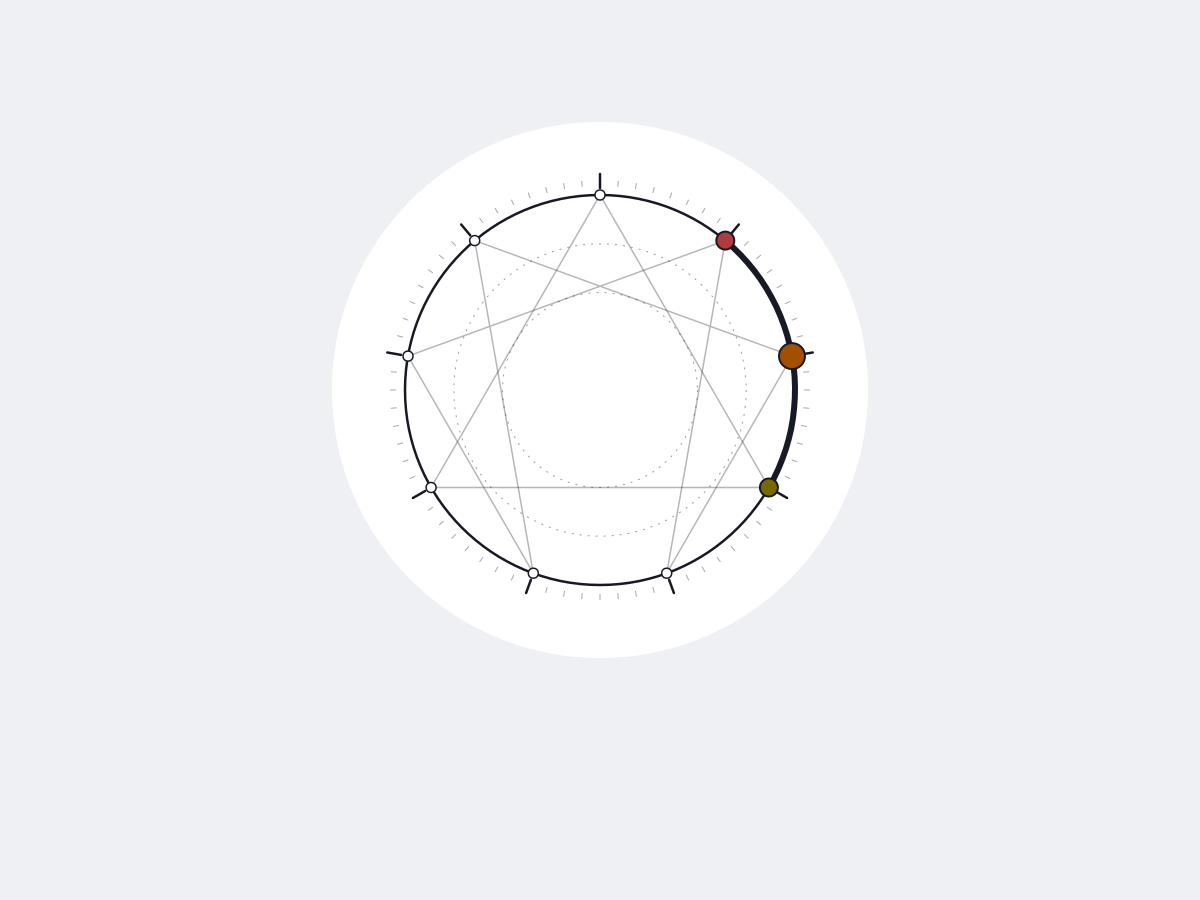
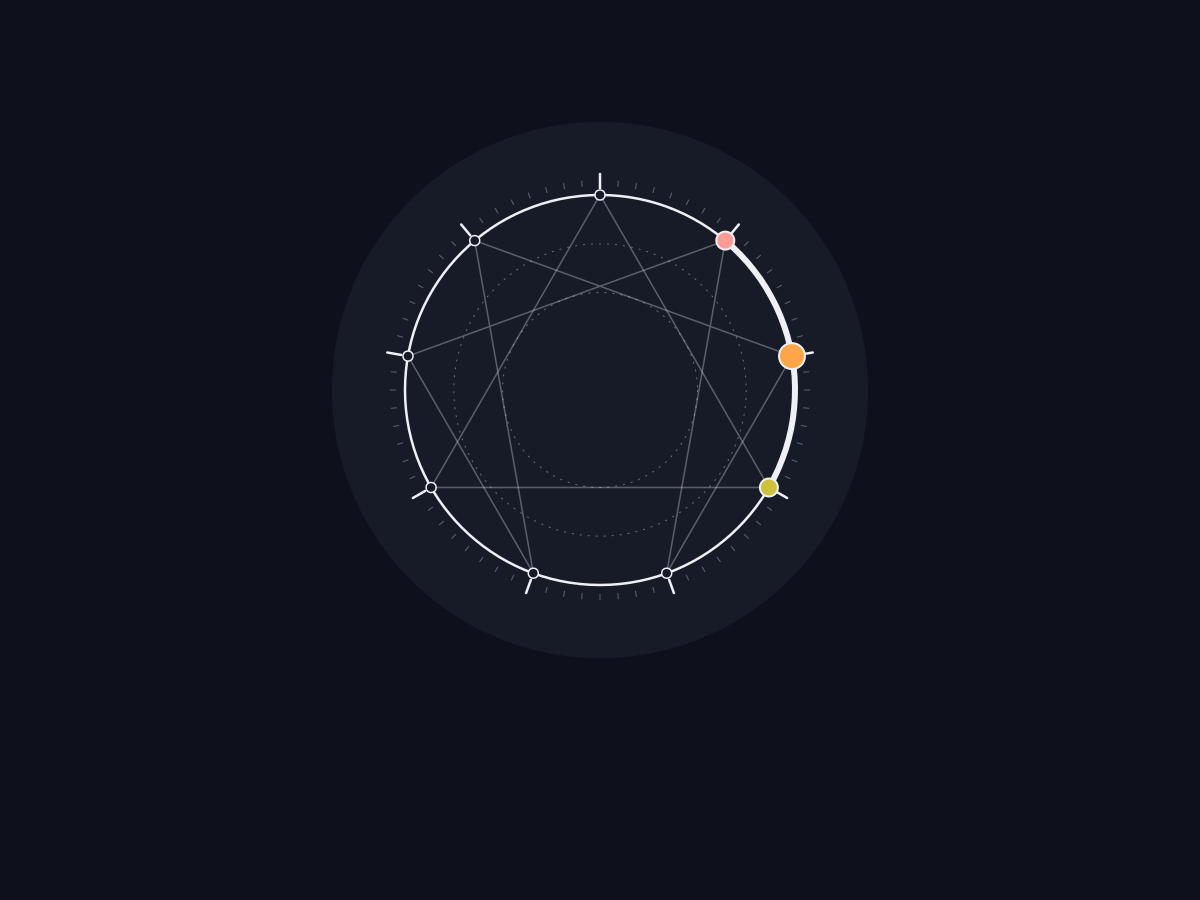
An Enneagram wing is one of the two types that sit beside your core type on the circle. Most people lean a little toward one of them. The wing adds tone and style to your core type, but your core motivation stays the same.
What is an Enneagram wing?
An Enneagram wing is a neighboring type that colors how your core type shows up. A Type 6 sits between Types 5 and 7, so a Six may lean toward the quiet focus of Five or the upbeat energy of Seven. The wing changes your style, not the core fear and desire that drive you.
Think of your core type as the main ingredient in a dish and the wing as the spice. Two Sixes may both care deeply about safety and trust. One adds the Five's habit of research and planning. The other adds the Seven's habit of joking, socializing and looking on the bright side. Same base, two different flavors.
The word "wing" comes from the picture itself. On the Enneagram circle, each number has a neighbor on its left and one on its right, like wings on either side of a bird. If you are new to the circle, our guide to what the Enneagram is covers the basics.
How do wings work for each type?
Each type can only take a wing from the two numbers beside it. That gives two options per type and 18 blends in all. The table lists both wings for every type, with a link to each wing page. Read both pages for your type and notice which one sounds more like your habits.
You can also browse every blend on our wings page, or start from your core type's guide, such as the Type 1 guide or the Type 8 guide. Each type guide shows both wings side by side.
What does a wing change, and what stays the same?
A wing changes your tone, pace and the way you deal with people. It does not change why you do things. A 3w2 and a 3w4 both want to do well and be seen as worthwhile. The 3w2 tends to reach out warmly, while the 3w4 tends to turn inward and polish their own style.
Here is a simple way to sort it out. Ask "why" and you find your core type. Ask "how" and you often find your wing.
| Question you ask | Usually points to |
|---|---|
| Why do I care so much about this? | Core type |
| What am I most afraid of losing? | Core type |
| How do I come across to others? | Wing |
| How fast or slow do I tend to move? | Wing |
| How do I show it when I am upset? | Both, blended |
Take two Nines as an example. Both want peace and tend to go along with others. A 9w8 often has a firmer edge and will push back once a line is crossed. A 9w1 often has a quiet sense of right and wrong and a love of order. Both are still Nines at heart.
What are balanced wings?
Balanced wings means you draw on both neighbors about equally. It is not a mistake or a sign of a weak result. Some people move between their two wings depending on the setting, using one at work and the other at home. Our results show this when the wing ratio is close to even.
Most people lean a little toward one side. A few lean heavily. And some sit near the middle. That is why we show a ratio instead of a single label. A result like 7w8 at 51 to 49 tells you something different from 7w8 at 80 to 20.
If your wings are close, try reading both wing pages for your type. You may find that one fits your work life and the other fits your private life. Both can be true at once.
How do you find your wing?
Start by being clear on your core type, since the wing only makes sense once that is settled. Then read both wing pages for your type. Notice which one describes your style, energy and way of dealing with people. Ask someone close to you which one sounds more like you.
- Confirm your core type first, using all nine scores.
- Read both wing pages for your core type.
- Note which one matches how you act with others.
- Ask a friend which description fits you better.
- Check whether the answer changes between work and home.
Your result from our test shows your wing as a ratio, so you can see how strong your lean is. If your top two types are close, settle that first. A wing is much easier to spot once you know the number it belongs to.
Can your wing change over time?
Many Enneagram teachers say your core type stays the same through life, while your wing can shift. A person might lean on one wing in their twenties and grow into the other later. Life events, new roles and personal growth can all bring out the neighbor you used less before.
This is one reason we avoid treating a wing as a fixed fact. A parent of young children might notice the caring side of their 2w1 or 2w3 blend change as their kids grow up. A new job can bring out the bolder neighbor. Growth often means making room for the wing you use less.
Wings are not the only way your type shifts. Your stress and growth lines show patterns that show up on hard days and good days, and your health state shows how well you are doing inside your type right now.
How do wings affect relationships?
Wings can explain why two people of the same type feel so different in a relationship. They also shape how two types meet. A 2w1 and an 8w9 may find more common ground in steady routines, while a 2w3 and an 8w7 may bond over shared energy and plans. Wings add detail to pair dynamics.
Our pair guides start from the core types, then note where wings shift the picture. For example, see how Types 2 and 8 or Types 4 and 5 tend to get along. In the 4 and 5 pair, a 4w5 and a 5w4 share a wing in each other's type, which often adds easy understanding.
What are the limits of wing theory?
Wing theory is a useful way to describe variety within a type, but research on wings is thin. Most studies of the Enneagram look at core types only, and that evidence is mixed. Treat your wing as a helpful description to test against your own life, not a measured fact about you.
A wing is a lens, not a box. If neither wing page fits, that is useful too. It may mean your wings are balanced, or it may mean your core type is worth a second look. Our guide to whether the Enneagram is accurate covers what the research does and does not show.
Frequently asked questions
What is a wing in the Enneagram?
A wing is one of the two types next to your core type on the Enneagram circle. It adds a flavor to your core type without replacing it.
Can you have two wings?
Yes. Some people use both neighbors about equally, which is called balanced wings. Most people lean a little more toward one side.
Can your wing change over time?
Many people notice their lean shifting with age or life stage. Your core type tends to stay the same while the wing blend moves.
Can a wing be any type?
No. A wing is always one of the two types beside your core type. A Type 4 can have a 3 wing or a 5 wing, but not a 7 wing.
How many wing types are there?
There are 18 wing blends in all: two for each of the nine types. Each is written with a lowercase w, such as 4w5 or 9w1.