Type 4 and a job with repetitive tasks: how to stay engaged
Many Type 4s find repetitive work draining. See what boredom research does and doesn't show, and small ways to put meaning back into routine tasks.
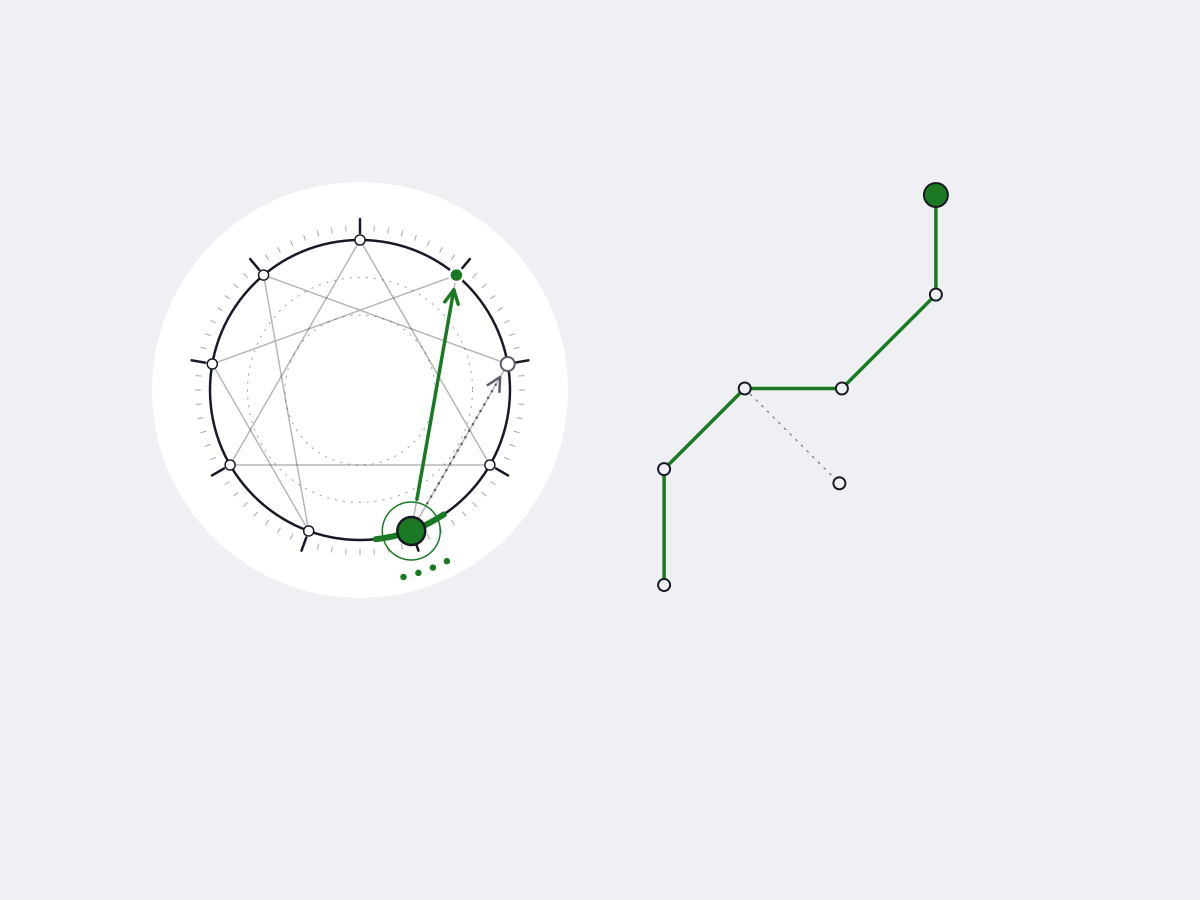

Many Fours find repetitive tasks draining, especially when nothing about the work feels personal. Research on job boredom links monotony to disengagement in workers in general, though it doesn't study Fours. What tends to help is small: reshape part of the task, add structure on purpose, and ask your manager for some variety.
It's the fourth hour with the same spreadsheet. Nothing is wrong, exactly. The work is fine, and so are the people. But a heavy, flat feeling has settled in, and a quiet voice keeps saying that none of this is really yours.
If that sounds familiar, you may recognize a pattern many people link to Type 4, the Original. A fair warning first: the Type 4 advice below comes from descriptive career writing, not from studies of Fours, and the Enneagram has mixed research support. The boredom research is real, but it covers workers in general. Use it all as a mirror, not a verdict.
Why can routine drain a Type 4?
Two commercial career sources describe a similar picture. One workplace guide says Fours are motivated to express their individuality and fear being seen as ordinary. It adds that they look for deeper meaning in their work and value real connection with others.
A career-advice page goes further and lists challenges with routine, repetitive tasks, "especially when those tasks don't offer any creative license." It also says Fours are motivated by creative expression, meaningful work, recognition and personal growth.
Put together, the idea is simple. When a task is repetitive and feels impersonal too, a Four may feel less like a person doing a job and more like a part in a machine. Coworkers can read that as moodiness or distance, when it may be closer to an ache for the work to matter.
None of this is a flaw. The same attention that makes routine feel flat is the one that notices what others overlook, and that can make careful work better. The growth edge is learning to bring that attention to the work instead of away from it.
What does the research say about boredom at work?
Here is where the Enneagram stops and general research starts.
A 2022 survey study in Frontiers in Psychology describes job boredom as a state of low arousal and displeasure, tied to too little stimulation. It lists repetitive tasks and monotony among the workplace predictors of boredom, along with a lack of learning opportunities and a lack of variety.
A review of burnout research describes a related pattern it calls "under-challenged." In that pattern, workers in monotonous, routine jobs find the work unrewarding and may show indifference, boredom and a wish to change jobs. The review also links this pattern to cynicism and to coping by distraction or avoidance. It is a review of theory, not a test of Enneagram types.
A few honest limits apply:
- Neither source studies Type 4.
- The Frontiers study is a survey of 317 employees in one sector, so it can't prove cause and effect.
- Boredom isn't the same as being a Four. Plenty of people of every type find monotony hard.
So the research tells you that repetition and boredom travel together for many people. It doesn't tell you that Fours are special in this.
What is job crafting, and can it help?
The same Frontiers study defines job crafting as self-initiated, proactive changes to your job so it fits your needs, goals and skills better. In that survey, job crafting weakened the link between feeling overqualified and feeling bored. The authors also say overqualified people need room to craft their jobs in order to find meaning in them.
You don't need a new job description to try a version of this. Here are small moves, depending on what your role allows:
- Change the order. Do the dullest task first, or save it for the end of the day, and see which feels better.
- Batch the boring parts. One focused hour of data entry can feel lighter than five scattered ones.
- Add a personal check. Spot one pattern in the data and write it down. Notice a way the process could be smoother.
- Give a template your touch. If the format is fixed, you may still be able to choose the wording, the layout of a note, or the way you greet a customer.
- Connect the task to a person. Ask who uses this report or this order, and what it lets them do. Meaning often lives in the next step of the chain.
Try one this week, not all five. If it doesn't help, drop it and try another. None of this fixes a job that truly doesn't fit, and it won't work the same for everyone.
Can structure help instead of fighting it?
It sounds backwards, but a bit of structure may give a Four more freedom, not less. The Cloverleaf guide says that when Fours feel secure, they tend to act on their ideals and bring more organization and self-control to their work. In Enneagram language, that's the growth line toward Type 1.
In practice, that might mean three things:
- Start at the same time each day, so you don't need a mood to begin.
- Pick one small ritual that marks the start of a task, like a certain playlist or a short walk.
- Set aside a short block, even twenty minutes, for something that feels like making, not just processing.
Steady habits also help with goals that stretch over a long time, and the Type 7 article on sticking with a goal that takes years has ideas that translate well, even though the type is different.
How can you talk to your manager about variety?
Many people hold back because they don't want to sound like they're complaining. Start from what you can offer instead.
Here are three lines to adapt:
- "I do the weekly report quickly and accurately. Could I also take on one piece of the analysis?"
- "I'd like to learn more about how this feeds into the next step. Could I sit in on that meeting once?"
- "What would make me a good fit for a wider role here?"
Keep the request specific and small. Feedback can sting more than it should for a Four, so it helps to ask for concrete examples and give yourself time to take them in. The year-end reviews article covers how feedback tends to land for each type, and the post on being passed over for a promotion has phrasing that works for any type who finds it hard to ask.
If your request is turned down, the answer may have more to do with staffing or timing than with you.
What if the routine is the whole job?
Sometimes the job is mostly repetitive, and small changes only go so far. It's fine to admit that. It may be worth asking what the job gives you, such as pay, stability or time for the rest of your life, and what it costs you. Some people make peace with a steady job and put their creative energy elsewhere. Others decide it's time for a change.
If you're weighing a steady role against an exciting one, the article on choosing between a safe job and an exciting one offers questions that fit any type. And if the flat feeling lasts for weeks and starts to affect your sleep or daily life, talk to a doctor or a licensed counselor.
To see how your own tendencies show up, take the test to find your core type.
What to take away
Routine isn't the enemy. A lack of meaning is the harder part, and meaning can sometimes be added in small ways: reshaping a task, adding a ritual, or asking for a little more variety. Pick one thing to try tomorrow, such as changing the order of your tasks or finding out who uses your work. For more on how your type fits a working life, see the Enneagram career guide.
Frequently asked questions
Are Type 4s bad at routine work?
No. A tendency is not a limit. Career-advice sources say Fours often struggle with routine tasks that offer no creative license, but many Fours keep steady jobs and do them well, especially when they find some meaning or personal touch in the work.
Does research show Type 4s get bored by repetitive jobs?
Not specifically. Research on job boredom studies workers in general and links repetitive, monotonous tasks to boredom. The Enneagram has mixed research support, so treat the Type 4 advice here as a reflection tool, not a finding.
What is job crafting?
It means making your own small changes to your tasks, relationships or view of your work so the job fits your needs, goals and skills better. One survey of 317 employees found it weakened the link between feeling overqualified and feeling bored.
How do I ask for more variety without sounding like I'm complaining?
Start from what you can offer. Name one task you do well, propose one small change, and ask what would make it possible. A specific request lands better than a general one.
Sources
- Person-Job Misfit: Perceived Overqualification and Counterproductive Work Behavior (Frontiers in Psychology, 2022)
- Burnout: A Review of Theory and Measurement (IJERPH, 2022)
- Enneagram Type 4: Traits, strengths & potential careers (TestGorilla)
- How To Use The Enneagram In The Workplace To Develop All Nine Types (Cloverleaf)