Type 9 and being passed over for a promotion: what to say and do next
Passed over for a promotion as a Type 9? See why quiet habits can hide your goals, what the research does and doesn't show, and how to speak up calmly.
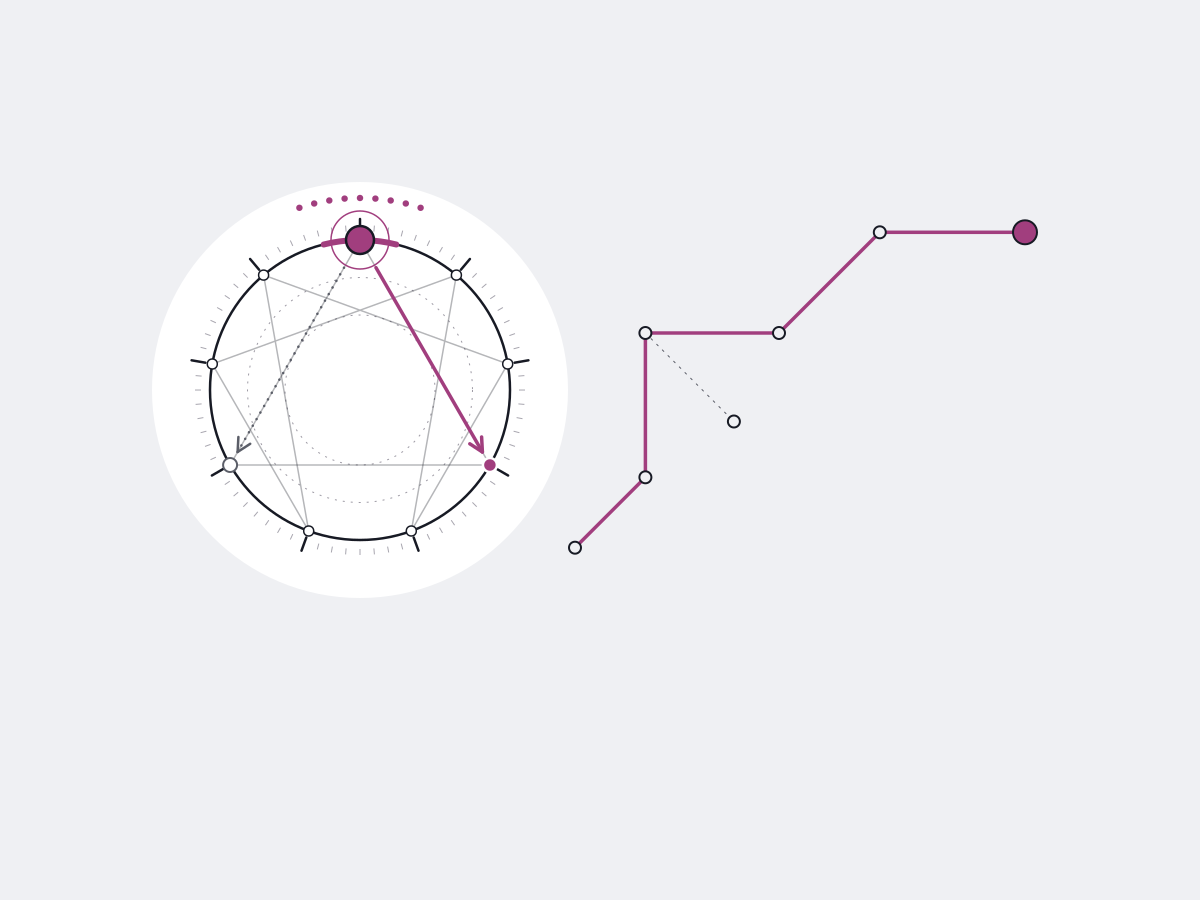

Many Nines say yes, smooth things over and keep their own goals quiet. That habit can make you easy to overlook when a bigger role opens up. Being passed over isn't a verdict on your work. The useful move is to say what you want out loud, ask what a strong candidate looks like, and build the habit in small steps.
You hear the news in the hallway. Someone else got the role. You say, "That's great for them," and mean about half of it. Then you drive home replaying every time you could have mentioned that you wanted it.
If that sounds familiar, you may be seeing a pattern many people link to Type 9, the Harmonizer. A fair warning first: the work-related sources on Nines are descriptive writing, not research, and the studies below aren't about the Enneagram at all. Treat all of it as a mirror, not a prediction.
Why Nines can get overlooked
Deferring to keep the peace
One Enneagram-at-work guide says Nines often defer decisions to keep the peace, even when they have strong opinions. It adds that they can struggle to state their needs, which leads to feeling overlooked, and that staying quiet can mean missing out on leadership and influence.
Here's how that can look. You let others pick the project, you say "whatever works for the team," and your manager never hears that you've been eyeing the lead role for a year.
Avoiding the awkward conversation
Another workplace overview describes Nines as agreeable people who shy away from conflict and confrontation for the sake of harmony. It also says Nines in management may feel uncomfortable giving feedback or delivering bad news.
The first guide adds that avoiding conflict can build long-term resentment. That's the quiet cost. Goals you never mentioned turn into frustration later.
None of this is a flaw. Many Nines are the steady, trusted person a team relies on, and that calm is a real strength. The growth edge is that your goals need to be said out loud, because nobody can act on something they never heard. For more on how your type fits a working life, see the Enneagram career guide.
| Habit | How it can read at work | A small alternative |
|---|---|---|
| Saying "whatever works for everyone" | You have no preference or no ambition | "I'd love to share my thoughts on this." |
| Waiting to be noticed | Your goals stay invisible | "I'm interested in the team lead role. Can we talk about it?" |
| Letting a tense moment pass | The issue grows into resentment | "I want to raise something while it's small." |
Asking and being given are not the same thing
Here's a finding that may take some pressure off. A 2024 preprint surveyed Australian finance professionals. It found that men and women were equally likely to ask for a promotion, and it attributed the higher promotion frequency of men to what the authors call "gifted advancements."
It's a preprint, and it isn't about the Enneagram. Still, it makes a useful point: asking and receiving are two different things. Some people get handed a role without asking. Others ask and still don't get it.
So if you weren't promoted, look at the reasons that have nothing to do with you. The budget may have been frozen. The role may have been tied to a reorganization. The criteria may have been vague. Your manager may simply not have known you wanted it.
What you can control is how visible your goals are. That's the part worth working on.
What to say to your manager
Many people hold back because they worry about seeming pushy. In two lab studies with women business students, people's sense of how much they could ask for without being punished shaped what they thought was reasonable. The author also noted that easing that worry did not clearly change what people actually asked for, and the studies were hypothetical with no real stakes. So don't wait until you feel fearless. Prepare, then ask.
Here are three lines to adapt:
- "I'd like to talk about my path here. I'm interested in the team lead role."
- "What would make me a strong candidate next time?"
- "Can we check in on this again in three months?"
Before the meeting, write down three results you're proud of and the one thing you're asking for. Say them out loud once. Start with a preference instead of a demand, and keep it a planning conversation, not a confrontation.
If you'd like more phrasing for hard conversations, the communication guide has ideas by type.
Small steps before the next review cycle
You don't have to become a different person. The first guide suggests small practice:
- Make small daily choices, like picking the restaurant, to build trust in your own preferences.
- Before you defer, ask yourself, "What do I really want?"
- Take the lead on one small project, so your initiative has something visible to attach to.
Be kind to yourself, too. A 2025 survey of 208 teachers found that self-compassion was linked to assertiveness at work, and assertiveness was linked to job satisfaction. The links were modest, the survey was a single snapshot, and about 92% of the respondents were women, so it can't show that one causes the other. Still, it fits a simple idea: treating yourself gently after a letdown may make it easier to speak up.
For a wider view of building your standing at work, try the success guide.
If the disappointment sticks around for weeks and starts to affect your sleep or your work, talk to a doctor or a licensed counselor.
What to keep in mind
Being passed over tells you about one decision. It doesn't tell you what you're worth. Your calm is a strength, and your voice matters just as much as the peace you create.
This week, try one small thing: tell one person what you want next in your work. Not sure Nine is your type? Take the test to find your core type.
Frequently asked questions
Is being passed over a Type 9 thing?
Not only. Anyone can be passed over for reasons that have nothing to do with personality: budget, timing, a reorganization, or a manager who never knew you wanted the role. The Enneagram offers one lens, which is that a habit of deferring and keeping the peace can leave your goals unspoken.
How do I ask for a promotion if I hate conflict?
Treat it as a planning conversation, not a confrontation. Ask for a short meeting, name the role you want, share two or three results, and ask what would make you a strong candidate. Writing your points down first helps.
Should I be angry or resigned about being passed over?
Neither is a verdict on you. Give yourself a few days to feel it, then pick one concrete next step. If the disappointment weighs on your sleep or daily life for weeks, talk to a doctor or a licensed counselor.
Does the Enneagram predict who gets promoted?
No. The Enneagram is a reflection tool with mixed research support, and none of the sources here show that a type predicts promotion. Use it to notice your own habits, not to explain an outcome.
Sources
- Enneagram 9: The Peacemaker - Strengths, Growth & Work Insights (Cloverleaf)
- The Enneagram at Work (WorkTango)
- The role of gender in promotion rates in the Australian Finance Industry (arXiv preprint, 2024)
- Relationship between self-compassion, assertiveness at work and job satisfaction among teachers (2025)
- Inducing gender/professional identity compatibility promotes women's compensation requests (PLoS One, 2018)