Type 1
Enneagram so-1: The Public Example
What a Social One (so-1) is: a Type 1 who holds high standards for how groups and communities should work. Strengths, struggles, stress and growth.
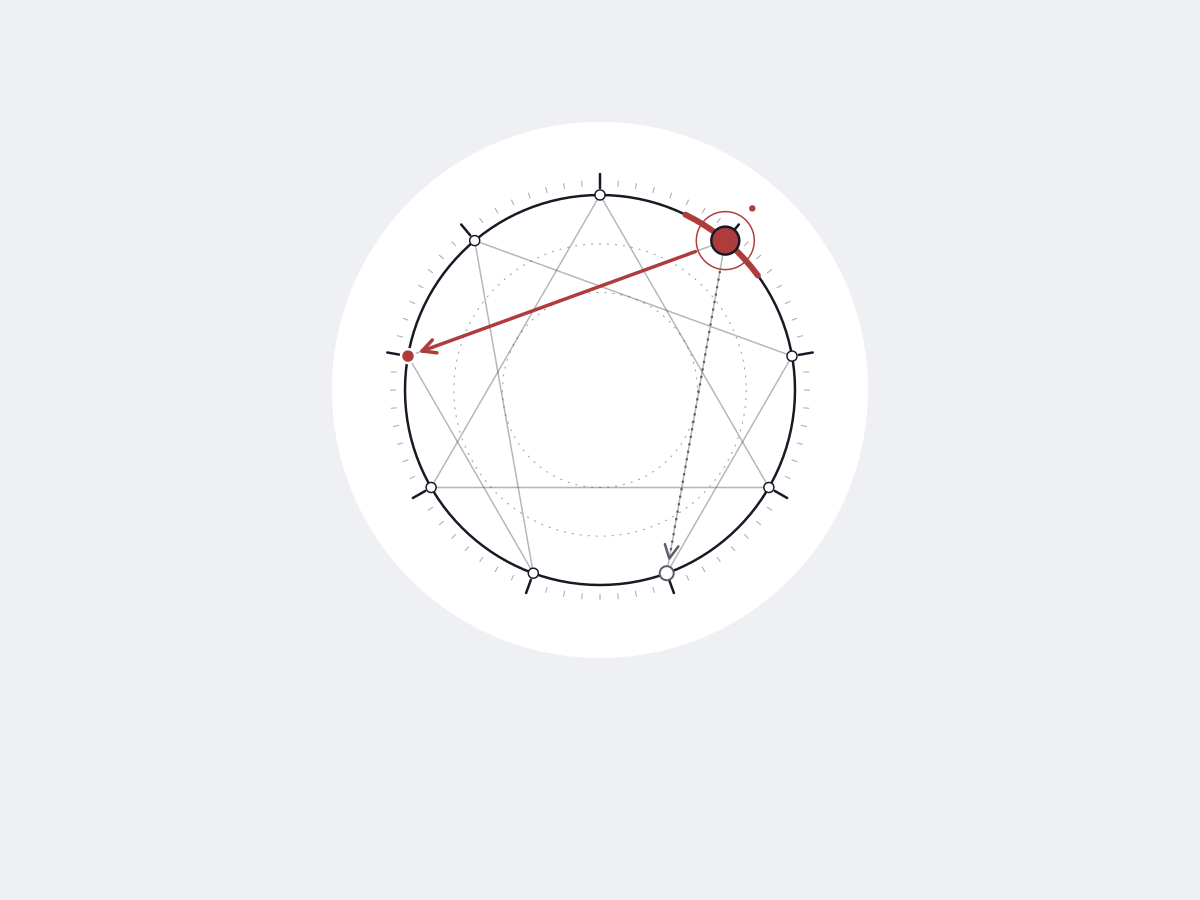

so-1 is the Social subtype of Type 1. These Ones aim their wish to be good at the group: how a team, club or community should behave. They often take on the role of the person who knows and shows the right way.
What is a Social One?
A Social One is a Type 1 whose leading instinct is the Social one. They care about fairness, shared rules and doing things properly where others can see. Many feel a duty to set an example. They are often thoughtful leaders and teachers, though they can come across as formal or distant.
Think of the volunteer who drafts the club's guidelines, keeps the minutes in perfect order and gently reminds everyone of what was agreed last month. They are not trying to boss people around. They believe a group works better when everyone follows a clear, fair plan.
Their core is Type 1, The Principled, the type driven to be good and to improve what is around them. Claudio Naranjo is widely credited with the subtype idea; the words below are ours and describe common tendencies, not rules for every Social One.
How is so-1 different from sp-1 and sx-1?
The three subtypes of Type 1 share an inner critic and a love of doing things well. The so-1 points it at public life and the conduct of groups. The sp-1 points it at their own household and routines, and the sx-1 points it at partners, friends and personal missions.
A Self-Preservation One may worry about the budget at home. A One-to-One One may argue hard for a change they believe in. The Social One is more likely to step back, think about the right principle, and then calmly explain it to the whole room.
| Setting | Typical so-1 pattern |
|---|---|
| Meetings | Brings the agenda and keeps the group on track |
| Community | Volunteers for roles that keep things fair |
| Teaching | Explains the method clearly and expects it to be used |
| Conflict | Points to the agreed rule rather than raising their voice |
| Public image | Wants to be seen as someone who does things properly |
What are the strengths of a Social One?
Many Social Ones bring fairness, clarity and steady leadership to the groups they join. They understand how systems work and how to improve them. They keep promises made to a community. When healthy, they are patient teachers who help others learn skills and values without shaming anyone.
- A strong sense of fairness for everyone involved
- Clear explanations and well-made plans
- Reliability in public roles and duties
- Calm in formal or high-stakes settings
- Real care for the common good
What do Social Ones struggle with?
A Social One can struggle with rigidity. They may believe there is one correct way and feel quietly superior to people who do it differently. Holding themselves to a public standard can make them stiff and hard to reach. They may hide frustration behind politeness until it comes out as cold judgment.
It can also be lonely. Being the person who models good behavior means rarely being the one who gets to be messy, silly or unsure in front of others.
How does an so-1 act in close relationships?
In close relationships, a Social One is usually loyal, principled and dependable. They may bring the same standards home that they use in public life. Partners can feel they are being taught rather than met. Closeness grows when the so-1 shares feelings and doubts, not only views on the right approach.
A simple shift helps: asking "how do you see it?" before offering the correct answer. Friends and partners can help by inviting the so-1 into relaxed, low-stakes time where nothing needs to be done properly.
What happens to a Social One under stress?
Under stress, Ones may take on traits of Type 4 along their stress line. A stressed so-1 may feel misunderstood by the very group they serve and pull away in hurt. They can become moody, private and convinced that nobody else cares about doing things right. Stepping back and talking it through helps.
The Type 4 guide describes the feeling side of this stress line. Early signs include rewriting other people's work late at night and feeling bitter about carrying the group alone.
How can a Social One grow?
Growth for a Social One often means holding standards with an open hand. On the growth line, Ones gain traits of Type 7: curiosity, humor and ease. A useful practice is to let someone else lead a task their own way and to look for what is good in their method.
- Ask for other views before sharing your own.
- Let one small rule go and notice what happens.
- Laugh at a mistake out loud, in front of others.
- Say thank you for effort, not only for correct results.
See the Type 7 guide for the lightness this growth line points to.
How do I know if I am a Social One?
You may be a Social One if Type 1 fits you and your standards come alive mostly in groups. Notice whether you feel responsible for how a team or community behaves, and whether being a good example matters to you. If public fairness stirs you more than home or romance, consider so-1.
The wing pages for 1w9 and 1w2 add another layer to how a One shows up. To see how all three instincts work together, read our instincts explainer. Still unsure about your core type? The test is a good first step.
Frequently asked questions
What is an so-1?
An so-1 is a Type 1, the Principled, who leads with the Social instinct. Their standards focus on groups, shared rules and setting a good example.
Why do so-1s seem reserved?
Many so-1s feel they should model correct behavior in public. That sense of duty can make them look formal or controlled, even when they feel warmly toward people.
How is so-1 different from sx-1?
An so-1 tends to focus on the right way for a whole group. An sx-1 tends to focus on improving one person or a cause they care about with more open intensity.
How do I know if I am an so-1?
If you are a One and you often feel responsible for how a group behaves, or you feel uneasy when people ignore agreed rules, you may lead with the Social instinct.