Why do many Type 5s feel most comfortable spending as little as possible?
Many Type 5s feel safest when they spend little. See why that feels so good, when it starts to cost them, and a few small ways to spend more comfortably.
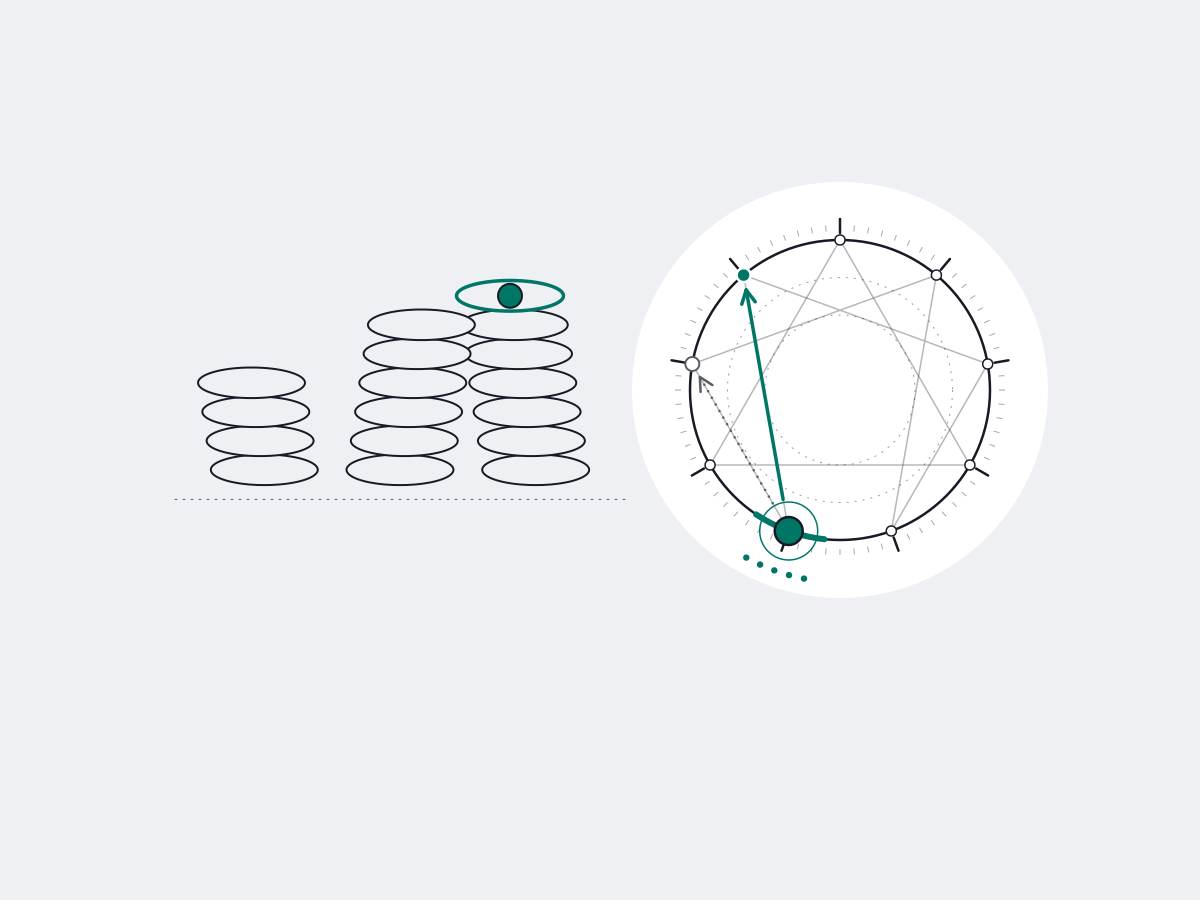
Many Type 5s feel most at ease when they spend little. Needing less feels like freedom, and a full reserve feels like safety. It gets in the way when saving turns into going without. Or when money decisions sit unmade for months.
If you see yourself in Type 5, the Scholar, this may sound familiar. Here's what the habit looks like, why it feels so good, where it can cost you, and a few small things to try.
What does the comfort of spending little look like?
You find a tool that works, and you use it for ten years. A friend suggests dinner out, and you think about what you already have at home. You don't mind. You can mostly do without.
Writers on the Enneagram often describe Fives this way. One money article says Fives are probably the biggest savers among the types and that money "means independence, and independence is their top priority in life." Another says Type 5s limit what they ask for and buy because they can mostly do without.
It's rarely a blanket "no" to spending. Many Fives spend freely on what they care about: books, courses, tools, anything tied to an interest. The same Debtist piece notes that introverted Fives tend to spend money on information.
| Where it shows up | What it can look like |
|---|---|
| Buying | Waiting, comparing, repairing before replacing |
| Saving | A healthy cushion, often kept in plain savings |
| Asking | Not asking others for money, favors or help |
| Spending | Generous on interests, careful on the rest |
These are common descriptions, not a rulebook. Plenty of Fives spend more than this, and plenty of other types spend less. For a wider view, see how each type handles money.
Why does spending less feel so safe?
Money is a stored supply. For many Fives, so are time, energy and attention. Spend any of them and the level drops. A low level feels risky.
One Enneagram teacher puts it strongly: Type 5 is "born with a world view of Scarcity" and tends to guard its resources. That's one writer's opinion, not a research result, but it fits how many Fives describe themselves. The feeling is less "I'm poor" and more "I don't want to be caught short."
Think of the last time you held off on a purchase. Chances are the pause felt like relief, not loss. That relief is the reward, and it is a big part of why the habit sticks.
This is also where independence comes in. If you need very little, you need very few people. That's a real strength. It lets you say no to jobs, deals and obligations that don't fit.
Stress can sharpen the pattern. When life gets loud, pulling back on spending, and on people, can feel like the one thing you control. If this sounds like your rough patches, the stress patterns by type page may help.
When does it get in the way?
Spending little becomes a problem when it stops being a choice. A few common signs:
- Savings that never get used. Some Fives keep cash in a savings account and don't invest it, partly for fear of getting it wrong. Careful becomes stuck.
- Thinking too long before buying. One blog notes that Fives think a lot before spending, and that sometimes you need to buy on the spot or lose the deal. A slow decision can cost more than a quick one.
- Worry that doesn't match the numbers. The money article above says Fives can still worry a great deal about their resources even when they handle money well. If your accounts look fine and your stomach doesn't, that gap is worth noticing.
A short check you can run on yourself:
- Do I want this, and am I not buying it only because buying feels uncomfortable?
- Am I putting off a repair or a replacement that is making my days harder?
- Am I skipping time with people because it costs something?
If you said yes to one or more, the saving may have stopped serving you. That's not a flaw. It's a habit that got a little too good at its job.
Is this just a Type 5 thing?
No, and it helps to keep that in view. Behavioral researchers study a nearby idea called the "pain of paying," the unpleasant feeling some people get when they hand over money. People who feel it strongly are often called tightwads. A 2025 paper in Frontiers in Psychology notes that tightwads may end up spending less than they would like, and it found that the way you pay, cash or card, changes how that feeling plays out.
That study is about spending habits in general. It says nothing about the Enneagram. The Enneagram is a reflection tool with mixed research support, so the most honest reading is this: Type 5 is one useful lens on a habit that many kinds of people share.
What helps?
Small, planned steps beat a big change of mind. Try one:
- Add a fun-money line. One personal finance writer suggests a "Fun Money" category in the budget, money you are allowed to spend without a reason. You can set the amount low.
- Set the rule in advance. Decide on a calm day what is worth buying, such as "anything that saves me an hour a week." Then follow the rule instead of reopening the debate each time.
- Give one purchase a one-day limit. Pick something small that you want. Research it, decide, and buy it within a day.
- Gather information, then trust it. You are good at research. Use it on your own money, then act on what you find.
If money worry feels heavy or doesn't ease, talking with a trusted person or a licensed professional is a sensible next step. Keep growth in mind too: the growth guide has more ideas for loosening a habit without losing what's good about it.
Not sure Type 5 fits you? Take the test to find your core type.
Frequently asked questions
Is being frugal a bad thing for a Type 5?
No. Spending little on purpose, because you truly want less, is a fine way to live. It tends to become a problem only when the saving stops being a choice and turns into going without things you actually want or need.
Why do many Type 5s hate spending money?
Popular Enneagram writing links it to a scarcity mindset and a wish for independence: money is a way to need no one. These are descriptions from writers, not research findings, so treat them as a lens rather than a rule.
Does the Enneagram predict how much someone saves?
No. The sources here are popular articles, not studies. People of every type save a lot or a little. Use the pattern as a prompt for reflection, not a forecast.
What is the pain of paying?
It is a term from behavioral research for the unpleasant feeling some people get when they hand over money. People who feel it strongly are often called tightwads, and one 2025 paper notes they may end up spending less than they would like.
How can a Type 5 spend more comfortably?
Try small, planned steps: a fun-money line in the budget, a rule set in advance for what is worth buying, and one low-stakes purchase you decide on in a day instead of a month.
Sources
- Living in a Scary World of Scarcity - Type 5 (Steve Purdom)
- Enneagram and Money: Financial Habits of All 9 Types (EnneagramTest)
- How Enneagram Type Relates to Finances (The Debtist)
- Your Enneagram Type & Spending Habits (Staying Sane)
- Swipe now, regret later? How credit cards reduce the appeal of safe choices (Frontiers in Psychology, 2025)