How can a Type 2 give at the holidays without burning out?
Enneagram Type 2 at the holidays: why December pulls on Nurturers, how to tell giving from fullness apart from giving to feel at ease, and five small moves.
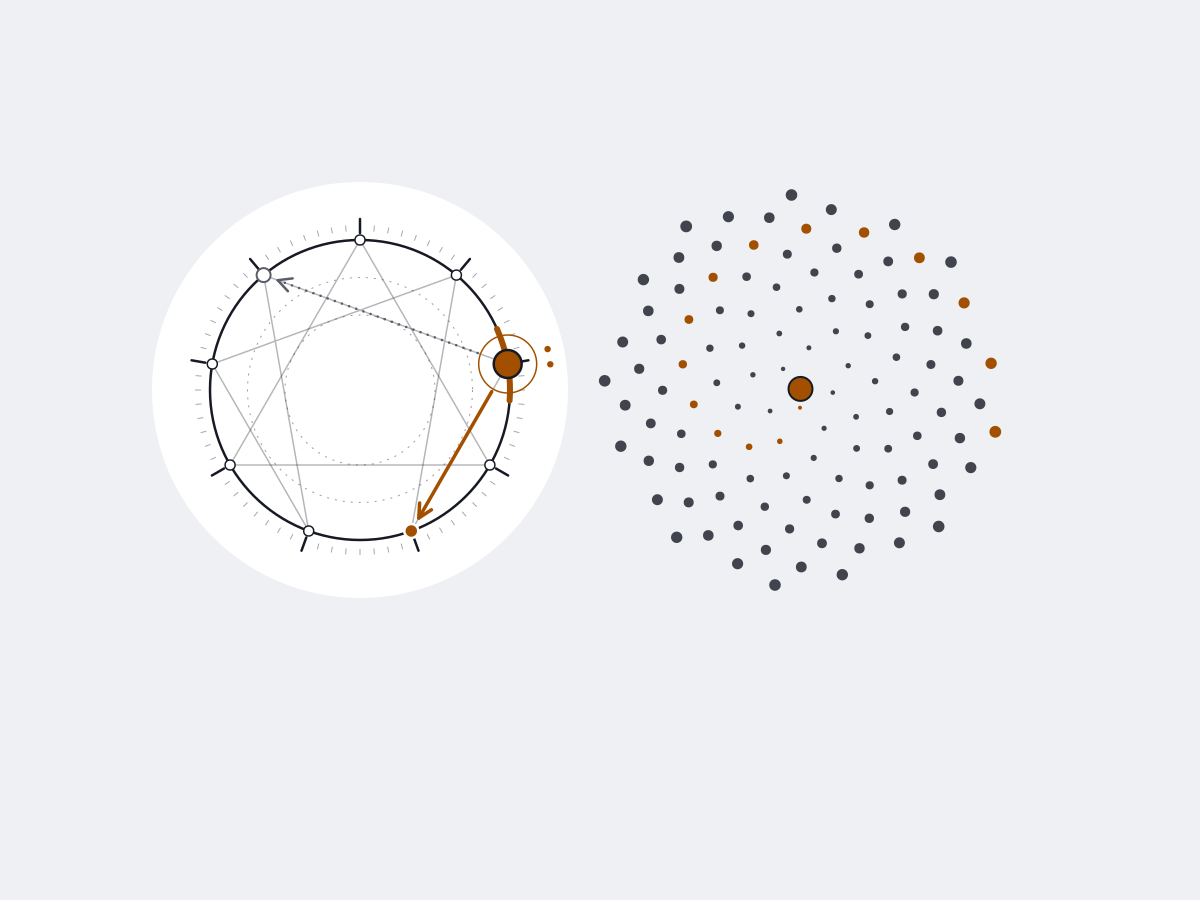
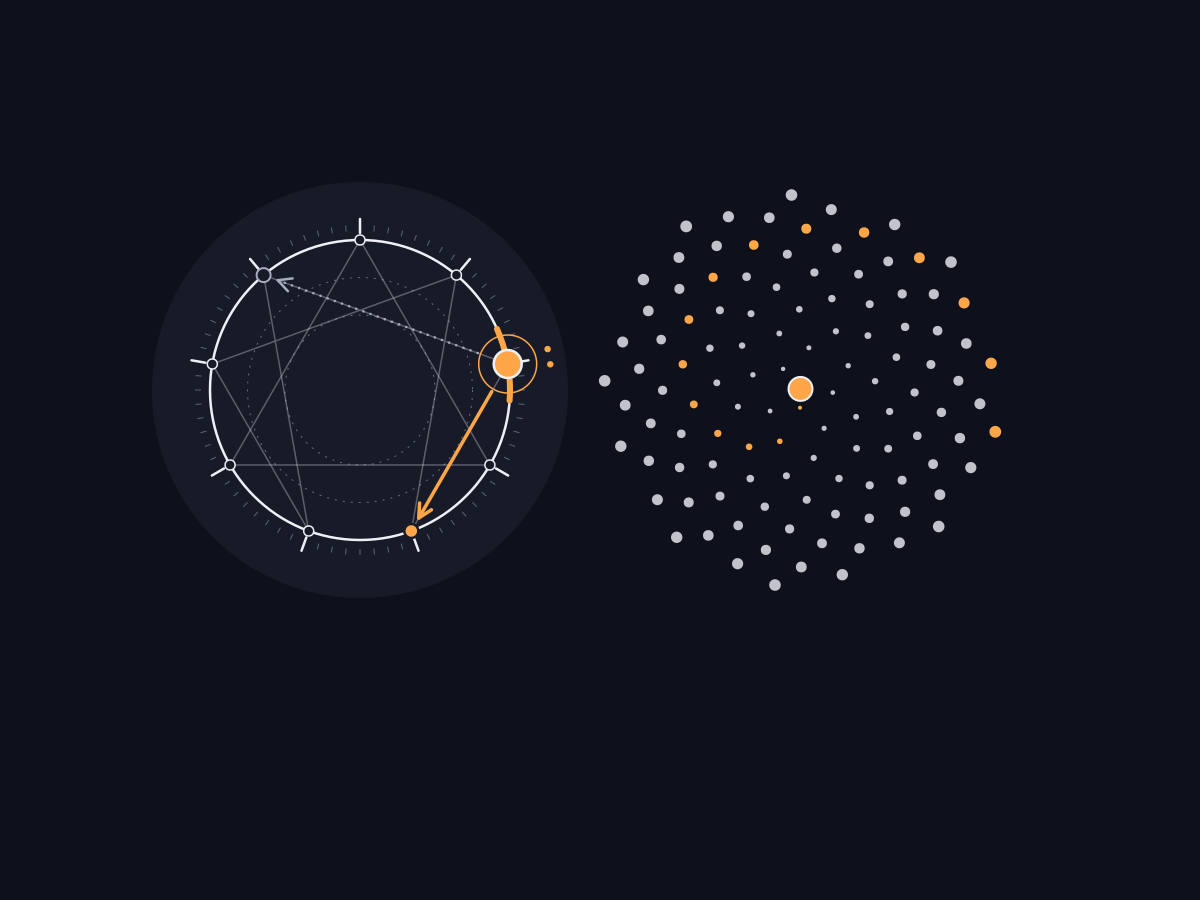
A Type 2 can give generously at the holidays and still stay steady. The trick is to give on purpose: choose a few gifts that matter most, decide a short no before anyone asks, and plan a place to refill. None of this means giving less love. It means you can still be giving in January.
It is 11 p.m. The cookies are packed, the neighbor's gift is wrapped, and you have answered three group chats. Everyone else is sitting down. You are not. If that sounds familiar, this post is for you, and it is about Type 2, the Nurturer in particular.
What does the Type 2 pattern look like?
Type 2, the Nurturer, tends to notice what other people need before they say it. A teaching table written for medical educators describes this type as sincere, empathetic and generous, and as someone who seeks the approval of others. It also says Twos often grew up where being helpful was emphasized.
That is a real strength. Many Twos are the friend who remembers the surgery date and shows up with soup. The growth edge is that the same radar can switch on every need at once, and December has plenty of them.
One honest caution: the Enneagram is a reflection tool with mixed research support. One network study of 859 students in Peru looked at how the types relate to each other and to a stress measure. It was a single-university sample using a self-report questionnaire, and the authors say it can't show what causes what. We also found no study showing that Twos burn out more than other types. Read what follows as a pattern to try on, not a fact about you.
Why does December pull so hard on Twos?
The season is a long list of small needs, and many of them land on whoever notices them. If you are the one who hosts, plans or remembers, the list grows fast.
Here is what one study of holiday workload found. A 2026 study followed 293 parents in the UK across the Christmas period, checking in several times a day for 35 days. Planning, organising and keeping track (the authors call it cognitive labour) and stress fed each other, moment to moment. More planning predicted more stress later, and more stress predicted more planning.
Two other findings are worth knowing:
- Stress predicted that parents would later hold their feelings in. Holding feelings in did not predict more stress afterward, so the authors read it as a way of coping in the moment.
- Parents with more support before the holidays held their feelings in less afterward. But support did not lower their stress or their planning load.
The study was of parents, not of Twos, and the sample was British, so don't stretch it too far. Still, it fits a Two's December: the planning and the stress feed each other, and a kind word from a friend doesn't shrink the to-do list. If you want help, ask for a share of the actual tasks.
Are you giving from fullness or to settle your own nerves?
This is the question to carry through the season, and it isn't an accusation. Wanting to be appreciated is part of being human.
A 2026 mini review on helping behavior points out that helping does not always benefit the helper. In some contexts, it says, helping has been linked to more distress and burnout. The review also suggests that help driven mainly by self-focused concerns, such as easing your own distress, may bring little benefit to the person giving it. The authors treat motive as an important piece of the puzzle. The review isn't about Enneagram types, so it can't say whether Twos in particular are affected.
You can borrow the idea as a short check before you say yes:
| Question to ask yourself | Leans toward fullness | Leans toward unease |
|---|---|---|
| Why am I saying yes? | I want to do this | I'm uneasy if I don't |
| How do I picture it afterward? | Glad it's done | Hoping they notice |
| What if they don't say thanks? | Mildly disappointed, fine | Stung for days |
Most real answers are a mix. You are only looking for which way today's yes leans. If you slip into old family roles when you go home, the role each type slips into may help you spot the pattern sooner.
How many gifts and tasks should you say yes to?
Fewer than you think. Pick two or three people or traditions that matter most to you, and give those your full attention. For the rest, go simple: a short note, a store-bought dessert, a phone call instead of a visit.
Try this on your list tonight:
- Write down everything you plan to do for others this month.
- Circle the three you would be sad to skip.
- For everything else, ask: could this be smaller, shared, or dropped?
If a tradition no longer fits, you can retire it. Plenty of families only notice a tradition when it stops, and then someone else often picks it up.
How do you say no ahead of time?
Decide before the ask arrives. It's far easier to say a sentence you wrote last Tuesday than one you invent while someone looks at you hopefully.
A few short ones to adapt:
- "I can't host this year, but I'd love to bring the pie."
- "I'm not able to take that on, and I hope it goes well."
- "Let me check my week and get back to you tomorrow." (Then do get back to them.)
Keep it to a sentence, add one real alternative only if you mean it, and skip the long apology. A short, kind no is still kind. Expect a flicker of guilt afterward. It tends to pass faster than you'd guess. For more wording, see saying no to holiday plans without guilt.
Where do you refill?
Giving needs a source. Plan the refill the way you plan the gift.
In interviews with 18 women caring for both a child and an older parent, the authors argue that self-care needs clear boundaries to prevent burnout. The women described leaning on friends, writing or crying it out, exercise and enjoyable activities. The study didn't measure burnout, and it was a small group in Tehran, so take it as a prompt, not proof.
Put two things on the calendar this month:
- A quiet stretch before the busiest gathering, with nothing to do for anyone.
- A slow morning the day after, with no plans.
If you want more ideas, how each type recharges after a gathering goes through the options.
If exhaustion or low mood has been sitting with you for weeks, that is worth bringing to a doctor or a licensed counselor. The holidays are not the whole story.
What should you try this week?
Pick one. Circle your three, write one no, or put a slow morning on the calendar. That's plenty. If you aren't sure Type 2 is your type, take the test to find your core type. The growth guide and stress guide go further.
Frequently asked questions
Do Enneagram Type 2s burn out more than other types?
We found no study showing that. Research on helping says it can sometimes be tied to distress and burnout, but those studies don't sort people by Enneagram type. Treat it as a pattern worth watching in yourself, not a fact about Twos.
How can a Type 2 say no at the holidays without feeling selfish?
Decide your no before the ask arrives, keep it to a sentence, and offer one real alternative if you want to. A short, kind no is still kind, and a flicker of guilt afterward is normal and tends to pass.
Is giving to be appreciated a bad thing?
No. Wanting to be appreciated is human. A 2026 review of helping research suggests that help driven mainly by self-focused motives may do less for the helper, so a quick check on your motive can be useful. It is a question to ask, not a verdict.
What if I only feel like myself when I'm helping?
Try one small stretch of time with no one to help and notice what comes up. Many Twos find it uncomfortable at first. If exhaustion or low mood lasts for weeks, talk to a doctor or a licensed counselor.
Sources
- The Enneagram and its application in medical education (Blose et al., 2022)
- Parenting stress spirals and a gendered labour division over the Christmas holidays (Botes et al., 2026)
- How helping others helps us: neural mechanisms linking prosocial behavior to psychological and physical wellbeing (Kim & Sul, 2026)
- Coping strategies of the sandwich generation in the care process: a qualitative study (Pashazade et al., 2024)
- Enneagram typologies and healthy personality to psychosocial stress: A network approach (Ramos-Vera et al., 2022)